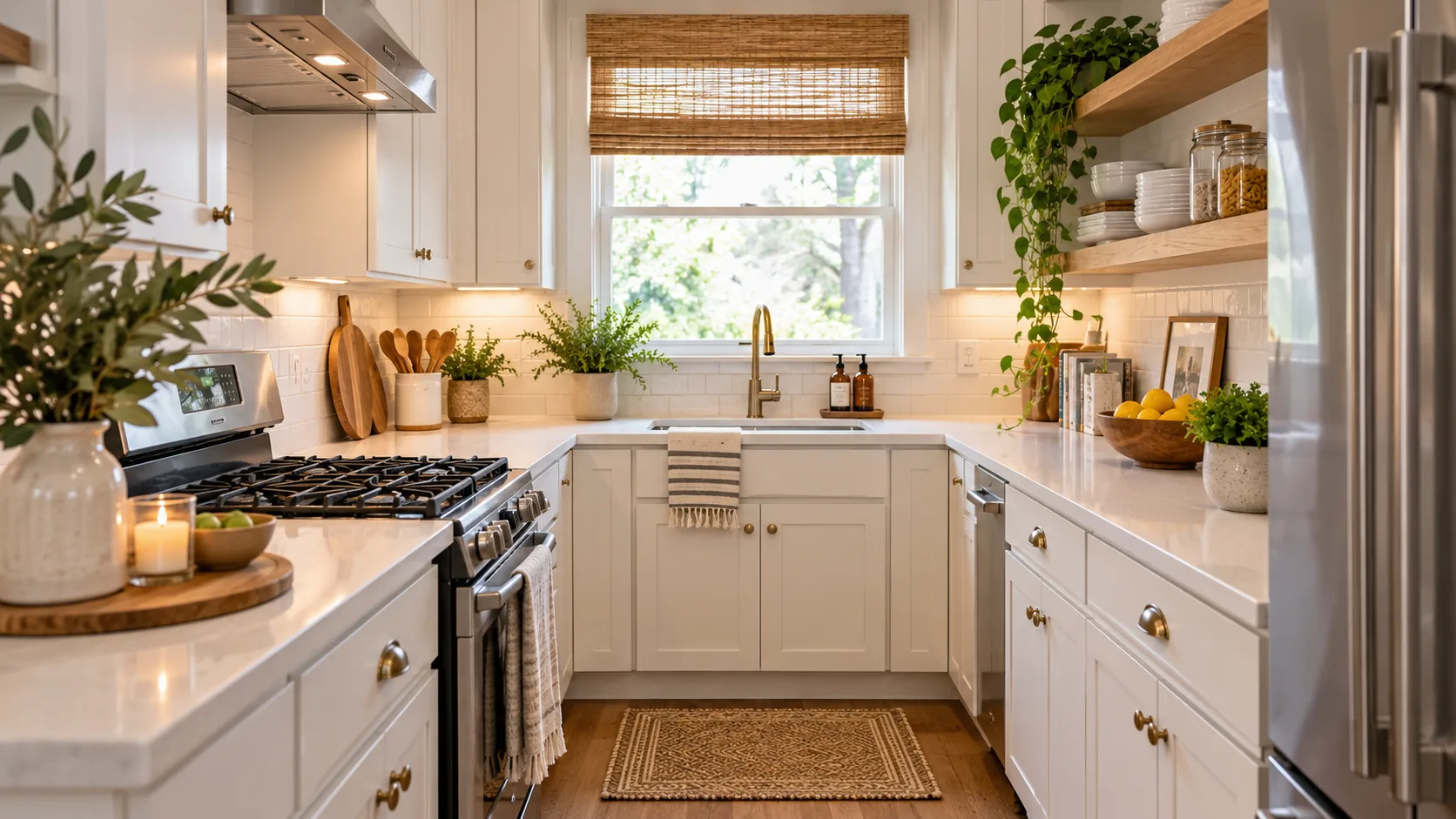
A small kitchen can be one of the hardest rooms to decorate. Every surface has a job, storage fills quickly, and even a few misplaced items can make the entire space feel crowded.
The good news is that creating a more spacious and inviting kitchen does not require a full renovation. Thoughtful organization, better lighting, and a few warm decorative details can change how the room looks and how easily it works. These small kitchen decorating ideas will help you create more breathing room while keeping everything practical for everyday life.
1. Start by Clearing the Most-Used Countertops
Before adding decor, remove anything that makes cooking and cleanup more difficult. Pay special attention to the space beside the stove, sink, and main food-preparation area. These hardworking surfaces should remain mostly open.
Relocate appliances you rarely use, combine loose items on a tray, and remove packaging that adds visual noise. You do not need completely empty counters. The goal is to leave enough clear space for the kitchen to feel usable rather than constantly crowded.
2. Create Zones for Cooking, Prep, Coffee, and Cleanup
A kitchen feels more organized when related items stay together. Keep cooking utensils and seasonings near the stove, cutting boards near the preparation area, and dishwashing supplies beside the sink.
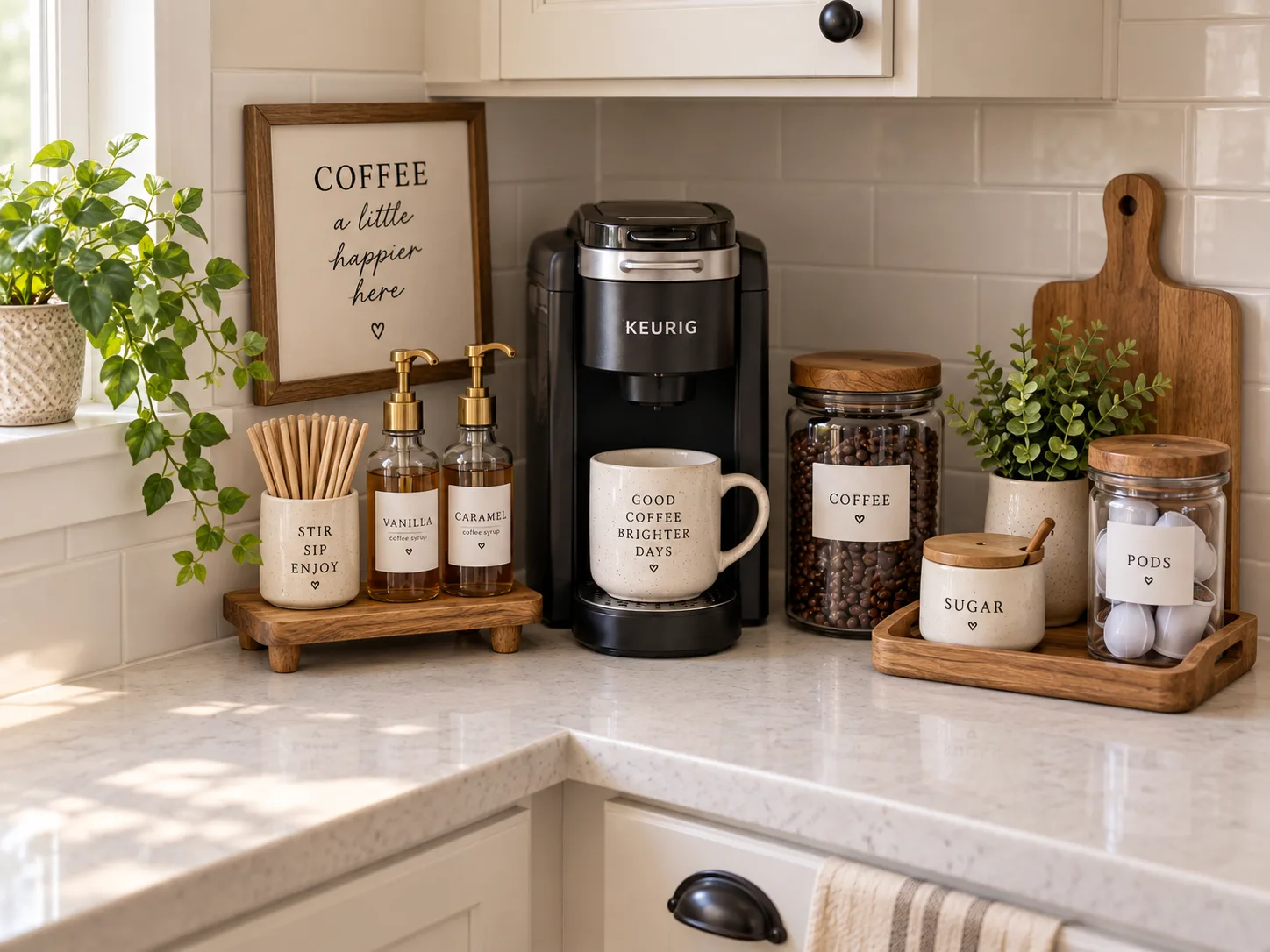
If coffee or tea is part of your routine, create a small station with only the essentials. A tray can define the area and keep jars, mugs, and a kettle from spreading across the counter. Simple zones reduce unnecessary movement and make even a compact kitchen easier to use.
3. Use Vertical Space With Shelves, Rails, and Hooks
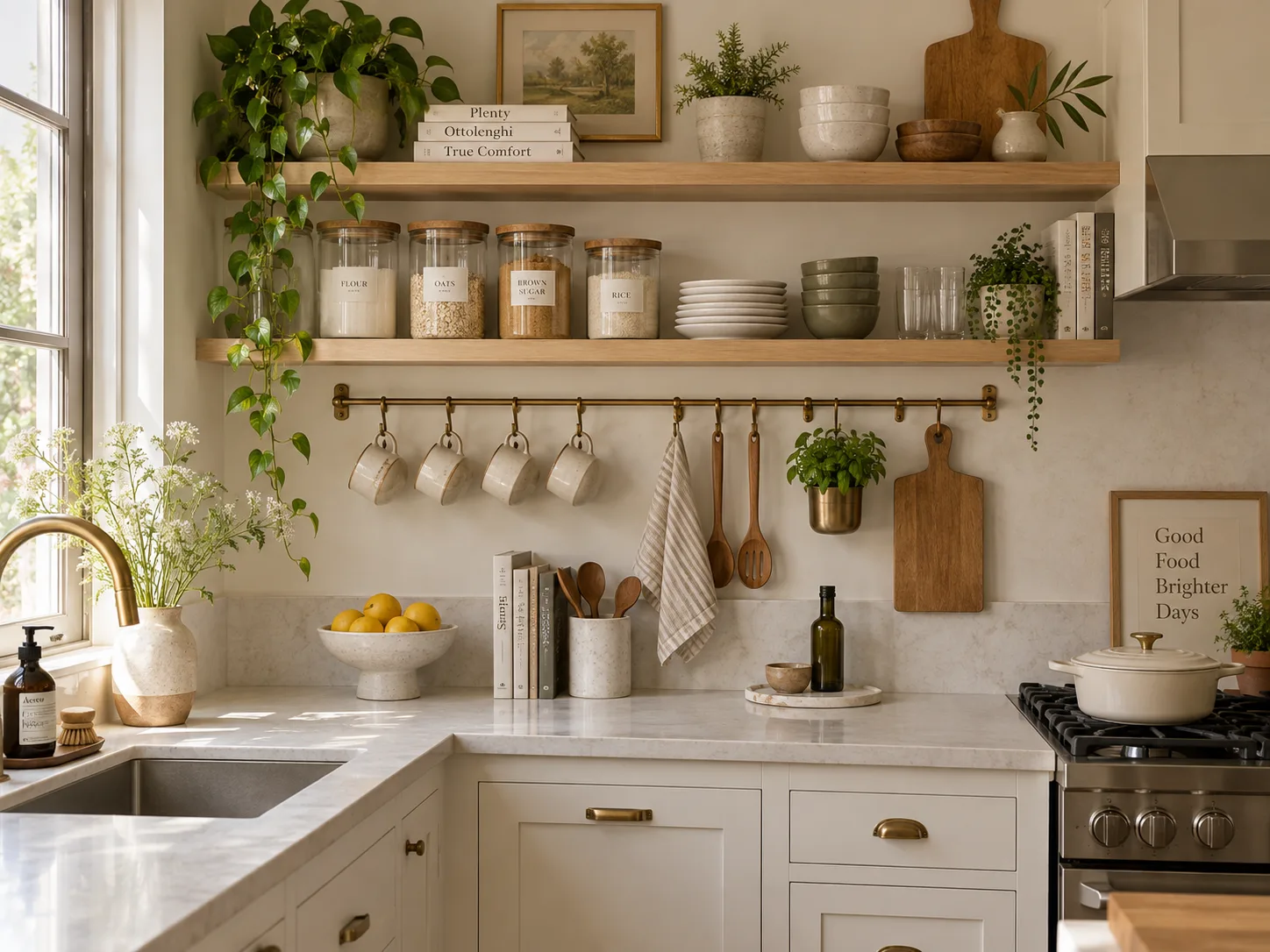
When cabinets and drawers are full, look upward. A short rail can hold frequently used utensils, while wall hooks can store oven mitts, measuring cups, or attractive pans. Floating shelves can provide room for dishes, jars, or a few decorative pieces.
Keep vertical storage edited and coordinated. Too many small objects can make the walls feel busy. Repeating similar colors or materials helps open storage look intentional rather than improvised.
4. Choose Slim Storage That Fits Awkward Gaps
Narrow spaces beside a refrigerator or cabinet can become useful storage. A slim rolling cart may hold pantry staples, cleaning supplies, or bottled drinks without taking over the room.
Over-the-door organizers, shallow wall racks, and stackable shelf risers can also create space where none seemed available. Measure every gap carefully before buying so the solution slides, opens, and functions comfortably.
5. Make Everyday Items Part of the Decor
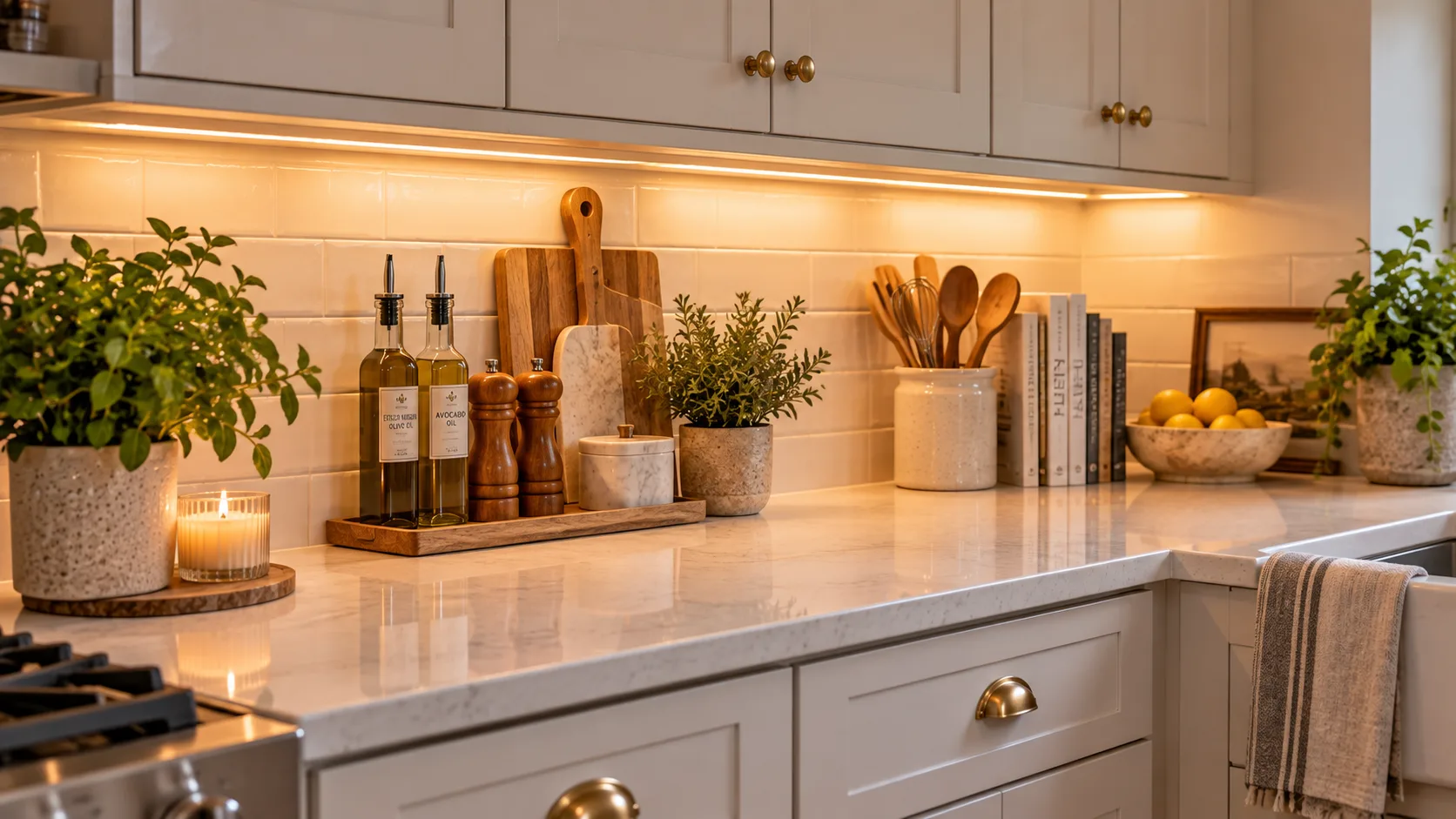
Useful objects can still be beautiful. Wooden cutting boards leaned against the backsplash add warmth. A ceramic utensil holder, coordinated canisters, or a bowl of fruit can contribute color and texture while remaining practical.
Choose items you genuinely use instead of purchasing decor that competes for counter space. In a small kitchen, the best display pieces usually earn their place through both function and appearance.
6. Brighten Dark Corners With Layered Lighting
A single ceiling fixture often leaves work areas dim. Under-cabinet lights can brighten the counter and make the kitchen feel more polished. Small plug-in or rechargeable lights are useful when new wiring is not practical.
Use warm or neutral white light that keeps food preparation clear without making the room feel harsh. Good lighting improves both safety and atmosphere, especially in kitchens with limited natural light.
7. Use a Light, Warm Palette to Open the Room
Light wall colors and simple window treatments help reflect daylight. Warm white, cream, pale greige, soft taupe, and muted sage can make a small kitchen feel airy without becoming cold.
Bring in deeper tones through hardware, frames, stools, or one small accent. Keeping large surfaces calm allows the eye to move through the room more easily.
8. Add One Simple Focal Point
A small kitchen does not need many decorative statements. One focal point is often enough. Consider a framed print, a patterned washable runner, a distinctive pendant light, or a simple arrangement of cutting boards and greenery.
Choose a feature that can be appreciated without interrupting the workflow. Giving the eye one place to rest makes the whole room feel more deliberate.
9. Improve the Sink Area Without Remodeling
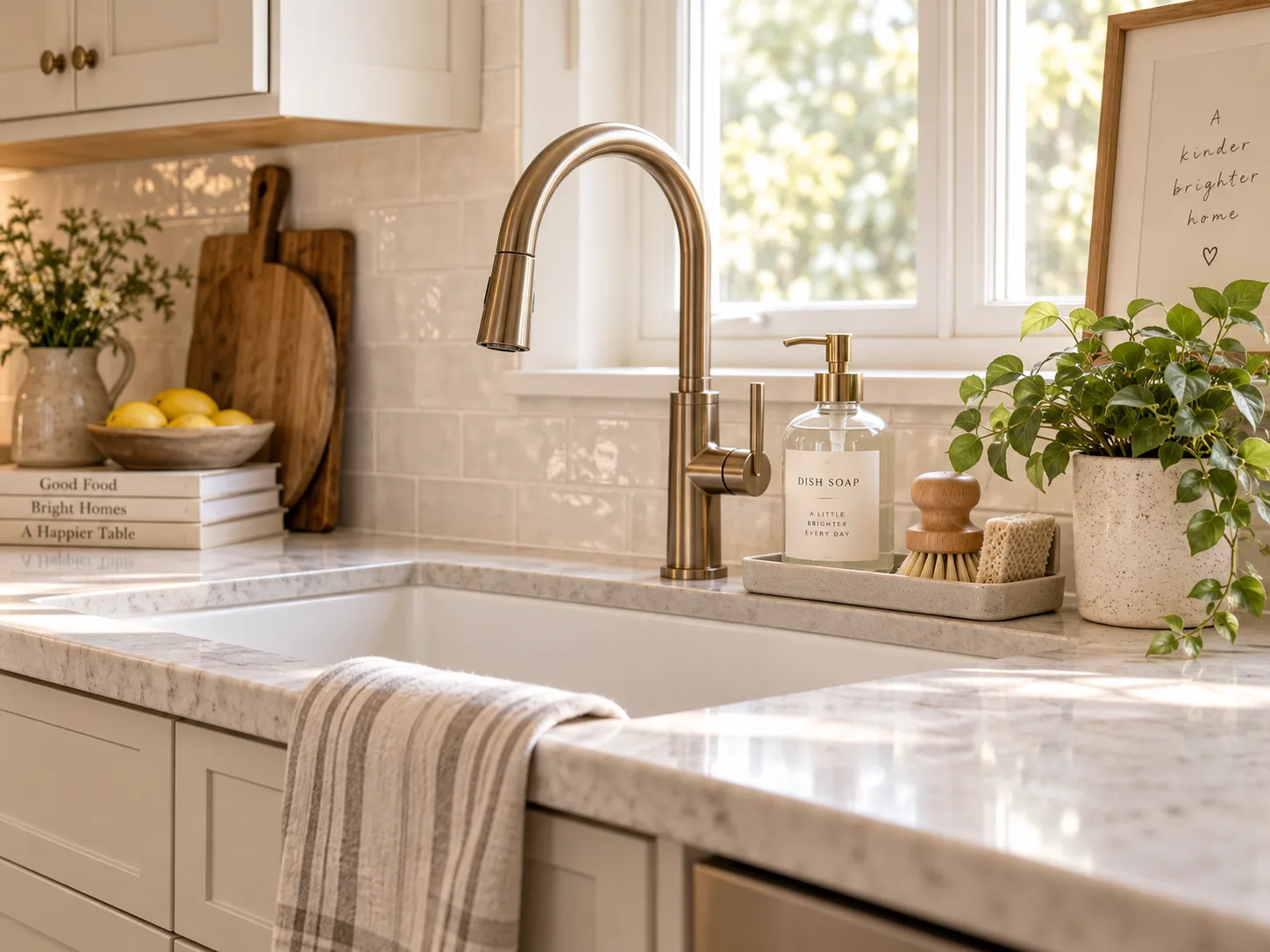
Because the sink is used constantly, small improvements here have a noticeable effect. Replace worn accessories, decant soap into a simple dispenser, and keep sponges or brushes together in a draining holder.
A small tray can contain the essentials and protect the countertop from water. If there is a window above the sink, keep the sill lightly styled so natural light remains the main feature.
10. Use Baskets and Trays to Control Visual Clutter
Trays and baskets turn several unrelated items into one organized group. Use a tray for oils and seasonings, a basket for snacks, or a shallow container for mail that enters through the kitchen.
Choose sizes that fit the contents closely. An oversized container wastes valuable space, while too many small organizers create another layer of clutter.
11. Add Warmth Through Wood, Linen, and Greenery
Hard surfaces can make a kitchen feel cold. A wooden stool, linen-look towel, woven basket, or small plant introduces softness and natural texture.
Keep greenery away from heat and choose a location that receives suitable light. Even one natural element can make a practical kitchen feel more welcoming.
12. Know What to Keep Off the Counter
Not every appliance deserves permanent counter space. If an item is used only once or twice a month, store it in a cabinet, pantry, or nearby utility area when possible.
Review the counters regularly and remove duplicates, empty containers, and objects that belong elsewhere. The space you preserve is just as important as the decor you add.
How to Make a Small Kitchen Feel Warm, Not Crowded
Warmth comes from texture, light, and signs of daily life, not from filling every corner. Keep the functional areas open, then add a few useful details in wood, ceramic, linen, or woven materials.
Repeat two or three finishes throughout the room so the design feels connected. A wooden board, woven basket, and warm-toned runner can create more character than a collection of unrelated decorations.
Final Thoughts
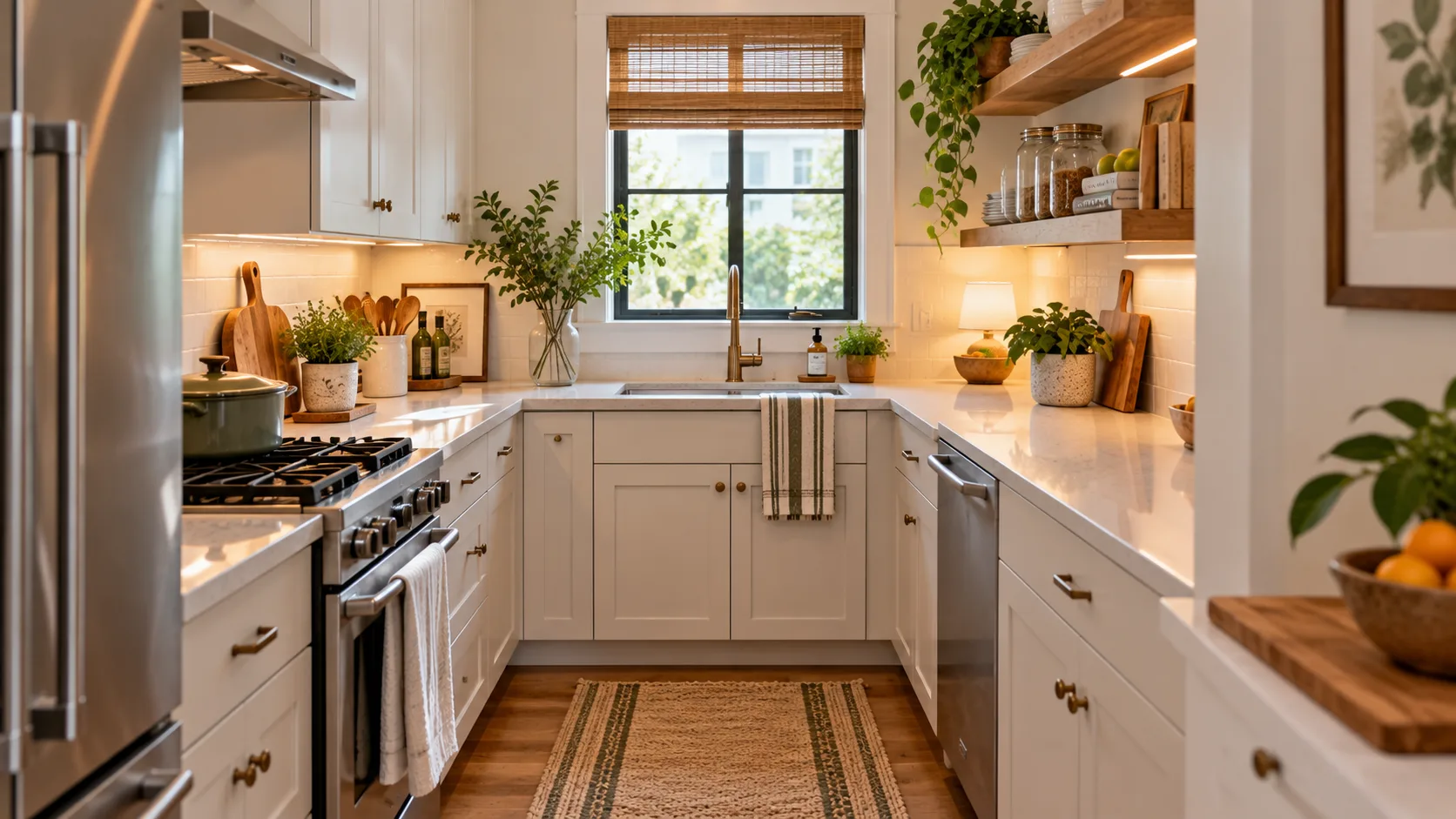
A small kitchen becomes easier to enjoy when storage supports the way you actually cook and every visible item has a purpose. Begin with the counters, create practical zones, and improve the lighting before purchasing more decor.
You do not need to transform everything at once. Clearing one preparation area, organizing the sink, or adding under-cabinet light can make the kitchen feel noticeably more spacious and pleasant.