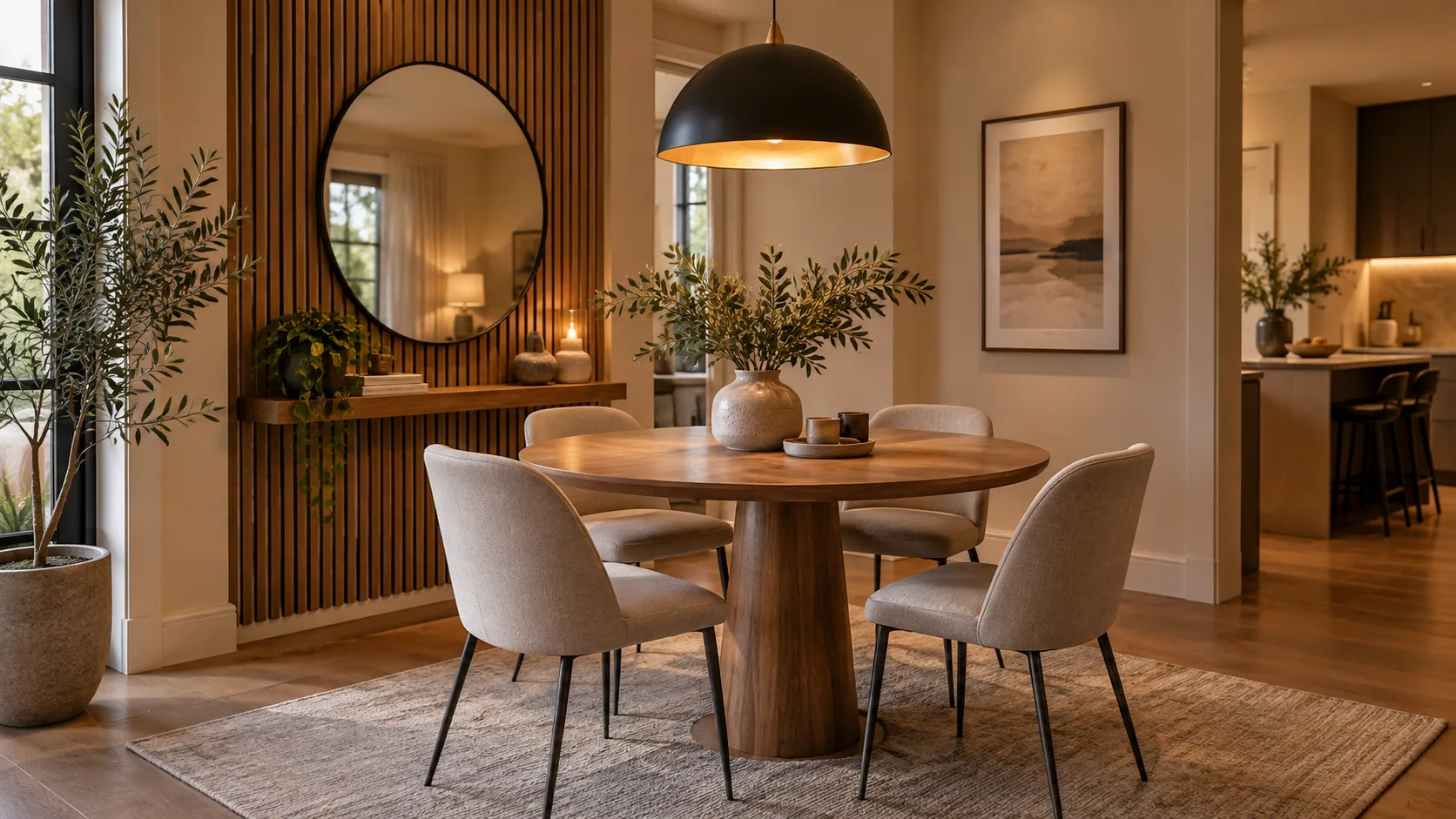
A small dining room often has to do more than host meals. It may sit between the kitchen and living room, double as a homework station, or provide extra storage. Without a clear plan, the space can quickly feel cramped or unfinished.
The right table, comfortable circulation, and a few well-scaled details can make even a compact dining area feel welcoming. These small dining room ideas focus on what matters most: creating a place where people can sit comfortably, move easily, and enjoy being together.
1. Measure the Room Before Choosing a Table
A table that looks perfect online may overwhelm the room once the chairs are pulled out. Measure the available floor area and allow enough clearance for people to sit and walk behind the chairs.
Use painter's tape to mark the proposed table size on the floor. This simple test makes it easier to see whether doorways, cabinets, or walkways will remain usable before you make a purchase.
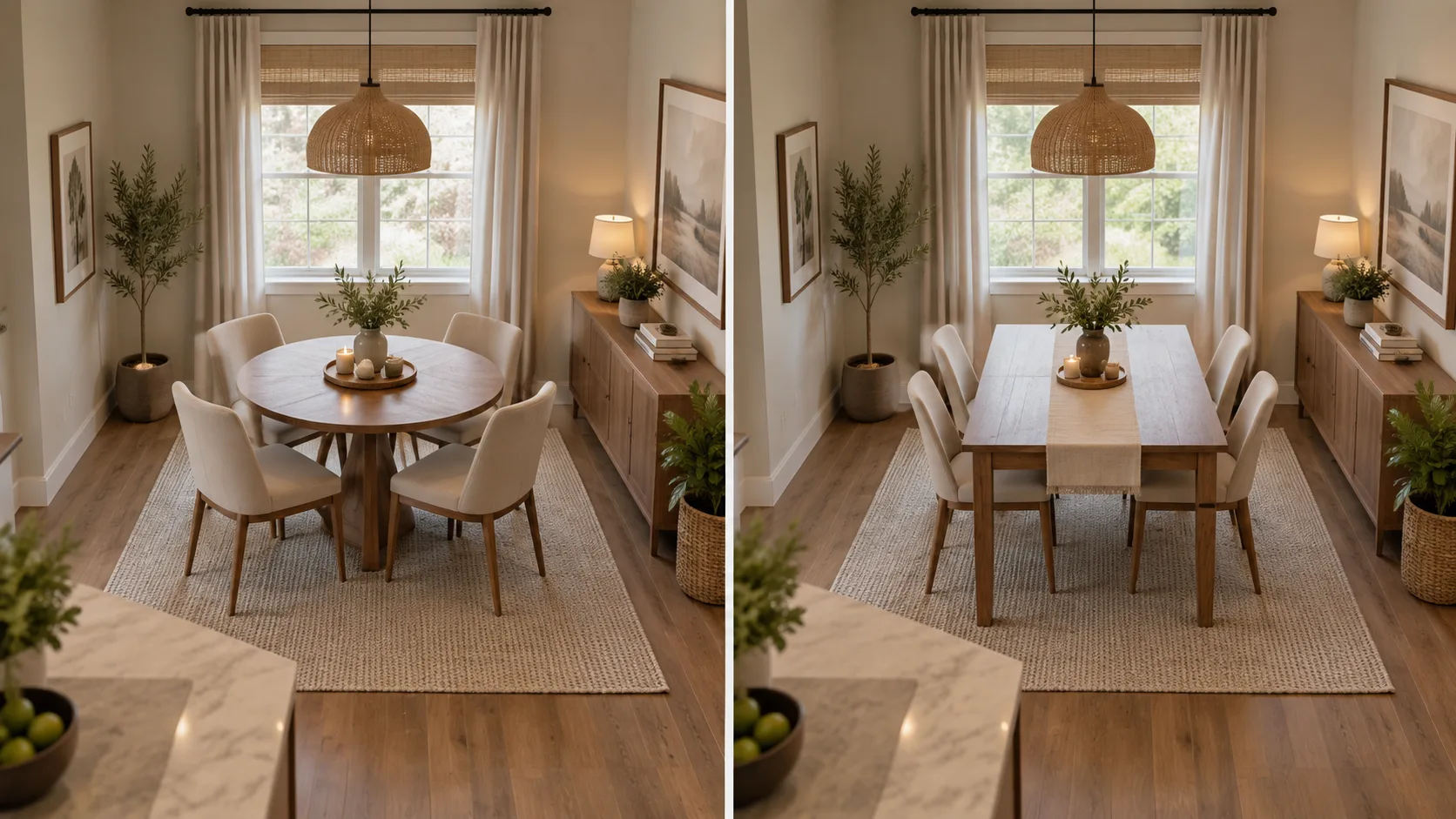
2. Select a Table Shape That Improves the Flow
Round tables soften tight corners and make conversation easy. Rectangular tables work well in narrow rooms, while extendable designs provide extra seating only when needed.
A pedestal base can offer more flexible legroom than four corner legs. Choose the shape that supports the room's natural traffic pattern instead of forcing the largest table that can technically fit.
3. Use Chairs With a Lighter Visual Profile
High, bulky chair backs can make a small room feel crowded. Chairs with slim frames, open backs, or gently curved shapes provide comfort without creating a visual wall around the table.
You do not need a perfectly matched set. Two upholstered end chairs paired with simpler side chairs can add interest while keeping the arrangement balanced.
4. Try a Bench When Extra Seating Is Needed
A bench can seat more than one person and tuck beneath the table when it is not in use. It is especially useful along a wall or in a casual family dining area.
Choose a bench that is easy to move and not deeper than necessary. Add one slim cushion if comfort is needed, but avoid layers that make it difficult to slide under the table.
5. Anchor the Space With the Right-Size Rug
A rug can help define a dining zone in an open-plan home, but it must be large enough for the chairs to remain on it when pulled out. A rug that is too small can make the room look tighter and catch chair legs.
Low-pile, washable, or easy-clean materials are practical around food. A quiet pattern can hide everyday marks while adding softness beneath the table.
6. Hang a Light Fixture at the Proper Scale
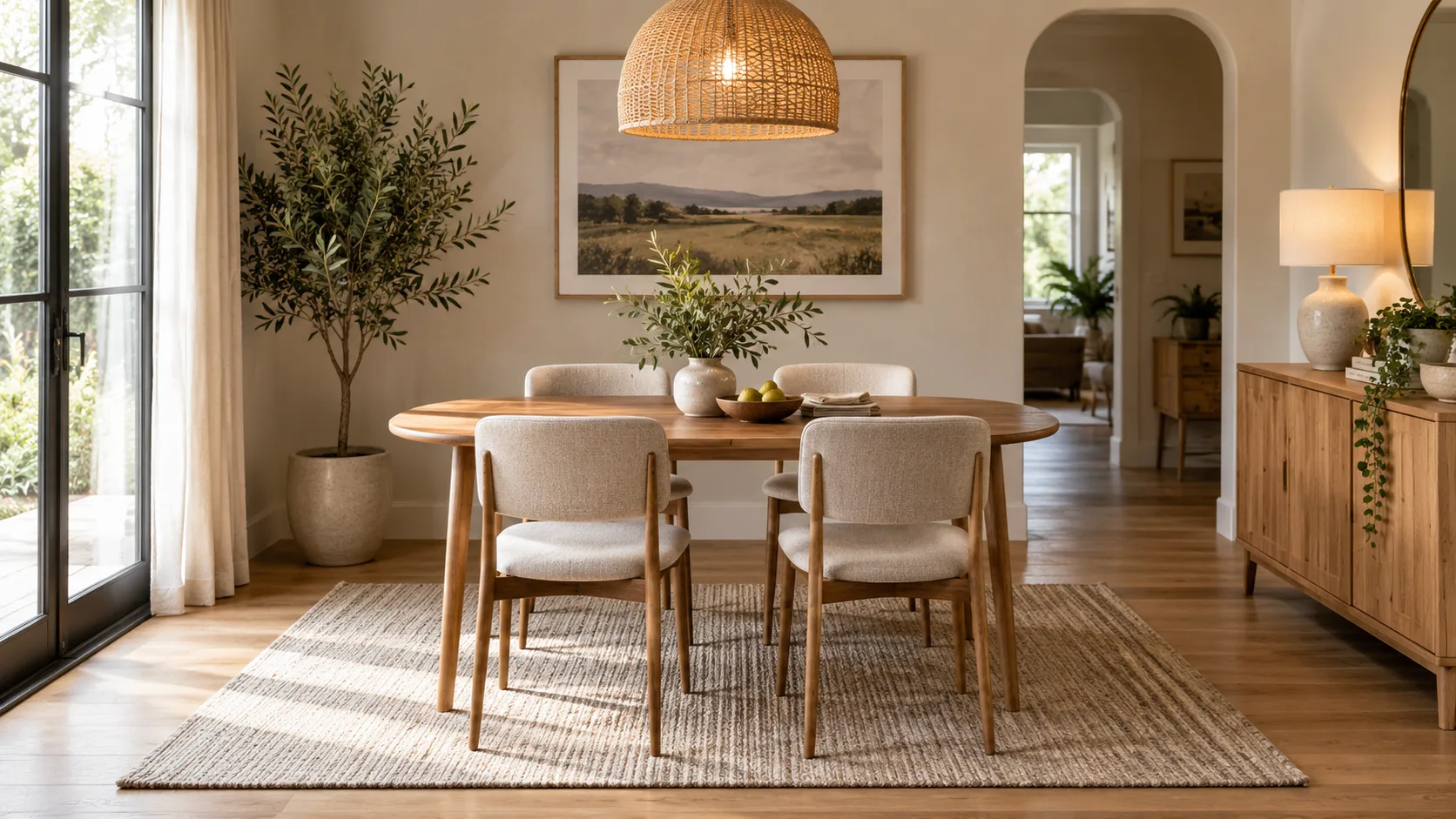
Lighting gives a dining area its sense of occasion. Center a pendant or chandelier over the table rather than the entire room, especially when the table sits off-center in an open layout.
The fixture should feel substantial enough to anchor the table without blocking views. Warm, dimmable light allows the same space to work for breakfast, homework, and relaxed evening meals.
7. Use a Mirror to Reflect Light and Openness**
A mirror can brighten a small dining room by reflecting a nearby window or light fixture. Position it where it expands a pleasant view rather than doubling visible clutter.
One medium or large mirror usually looks calmer than several small ones. A simple wood, black, or warm metal frame can connect it to the table and lighting.
8. Add Storage Without Turning the Room Into a Hallway
A shallow sideboard, wall-mounted cabinet, or narrow console can store linens, serving pieces, and items that would otherwise collect on the table.
Keep enough clearance for chairs and traffic. If floor space is extremely limited, use vertical shelving with closed baskets rather than forcing in a deep cabinet.
9. Create a Simple Centerpiece for Everyday Use
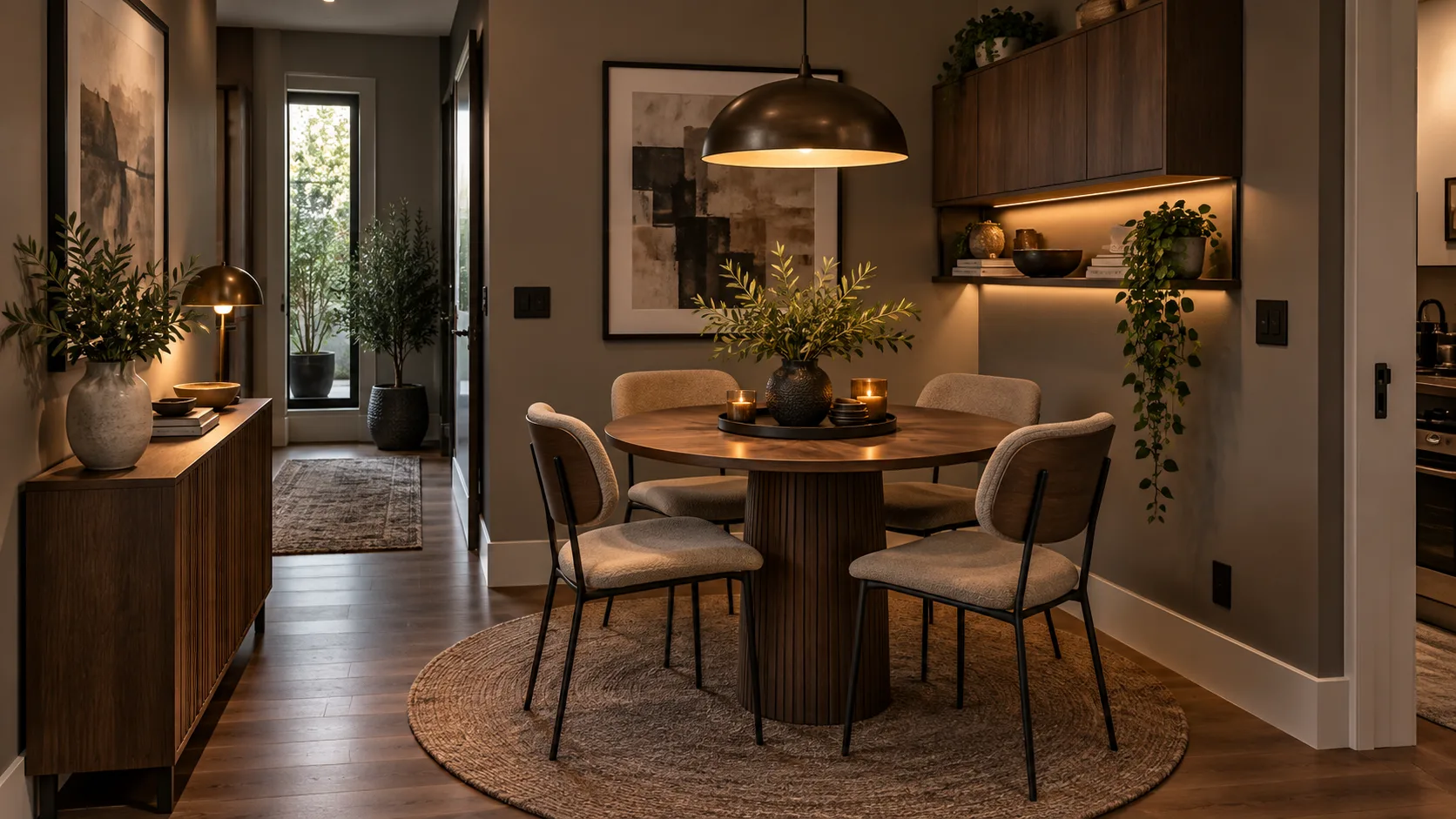
An everyday centerpiece should leave room for plates and conversation. A low bowl, small vase, candle, or branch in a simple vessel can make the table feel finished without needing to be moved at every meal.
Group small pieces on a tray so they can be lifted away together. Seasonal changes can be made through greenery or color instead of buying an entirely new display.
10. Connect the Dining Area to Nearby Rooms
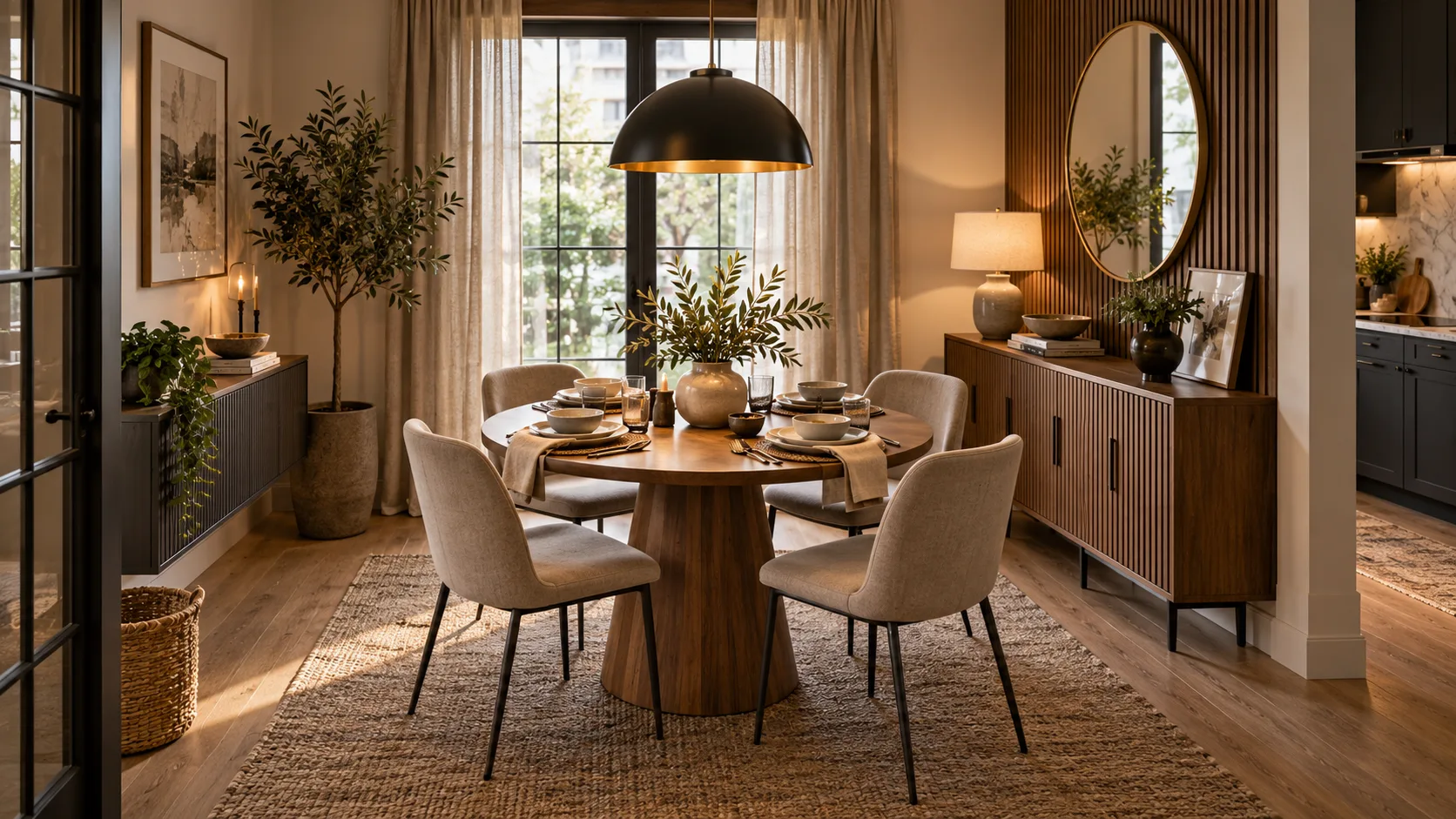
In an open-plan space, repeat one or two colors or materials from the living room or kitchen. Similar wood tones, black accents, woven textures, or warm neutrals help the dining area feel connected.
The rooms do not need to match exactly. A small amount of repetition creates flow while allowing each area to keep its own purpose.
11. Soften the Space With Curtains and Textiles
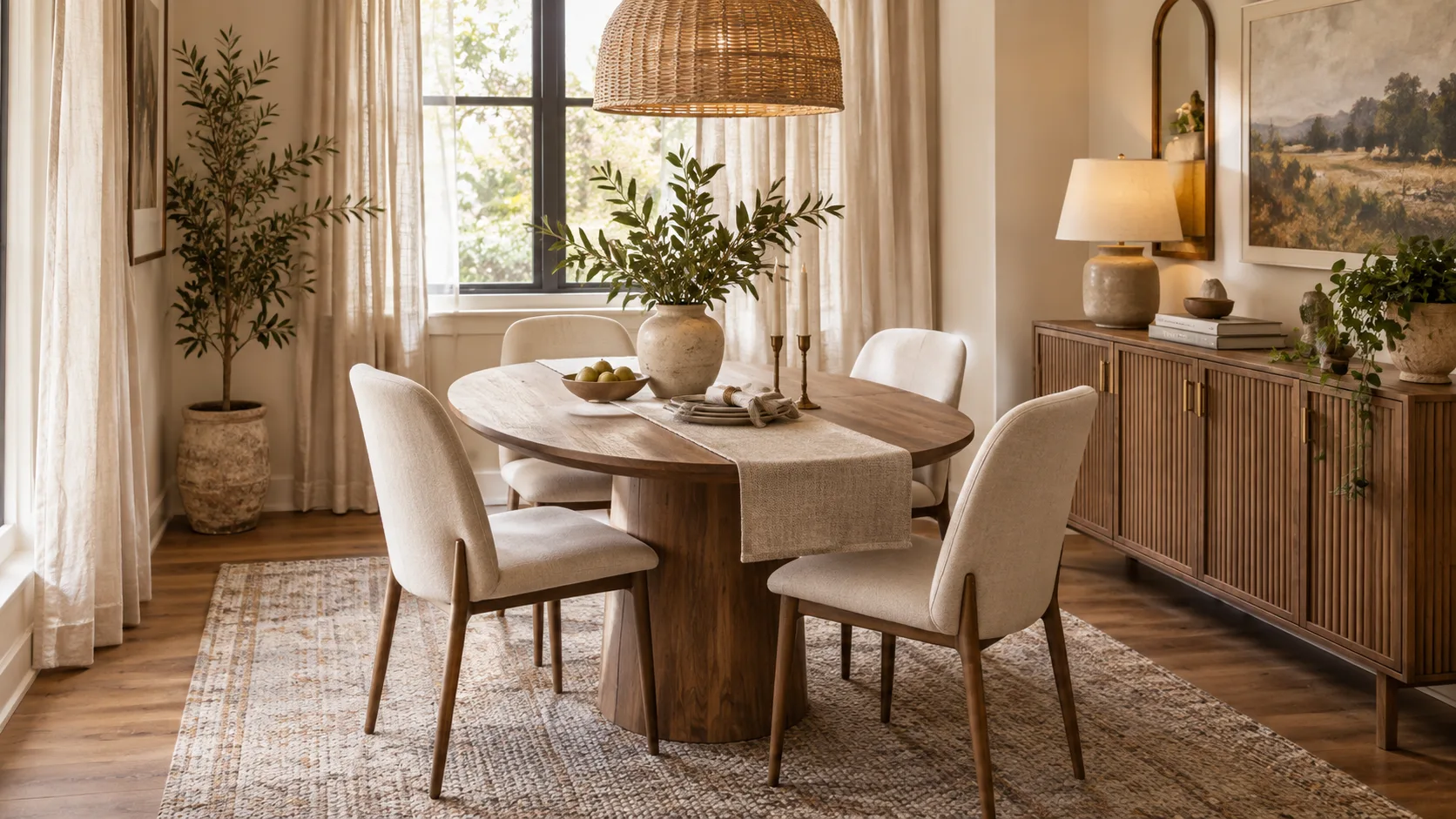
Dining rooms contain many hard surfaces, so a few textiles can make them more comfortable. Full-length curtains, a rug, seat cushions, or a simple table runner will absorb sound and add warmth.
Choose washable fabrics and limit competing patterns. Texture often provides enough interest without making a compact room visually busy.
12. Prepare Flexible Seating for Guests
You do not need to crowd the room with chairs used only occasionally. Keep one or two folding or stackable chairs elsewhere and bring them out for guests.
An extendable table, lightweight stools, or a nearby bench can also increase capacity. Flexibility allows the room to feel comfortable every day while still supporting gatherings.
How to Make a Small Dining Area Feel Special Every Day
A dining room feels special when it is ready to use. Clear the tabletop after work or homework, turn on warm lighting, and add one simple centerpiece. These small habits create a welcoming pause in the day.
Focus on comfort rather than formality. A well-proportioned table, easy-to-move chairs, and soft light will do more for the room than a large collection of decorative objects.
Final Thoughts
The best small dining room ideas protect both comfort and movement. Begin with accurate measurements, choose furniture that suits the room's shape, and add storage only where it will not interrupt the flow.
A compact dining area does not need to feel temporary or overlooked. With thoughtful scale, warm lighting, and a few practical details, it can become one of the most inviting places in the home.