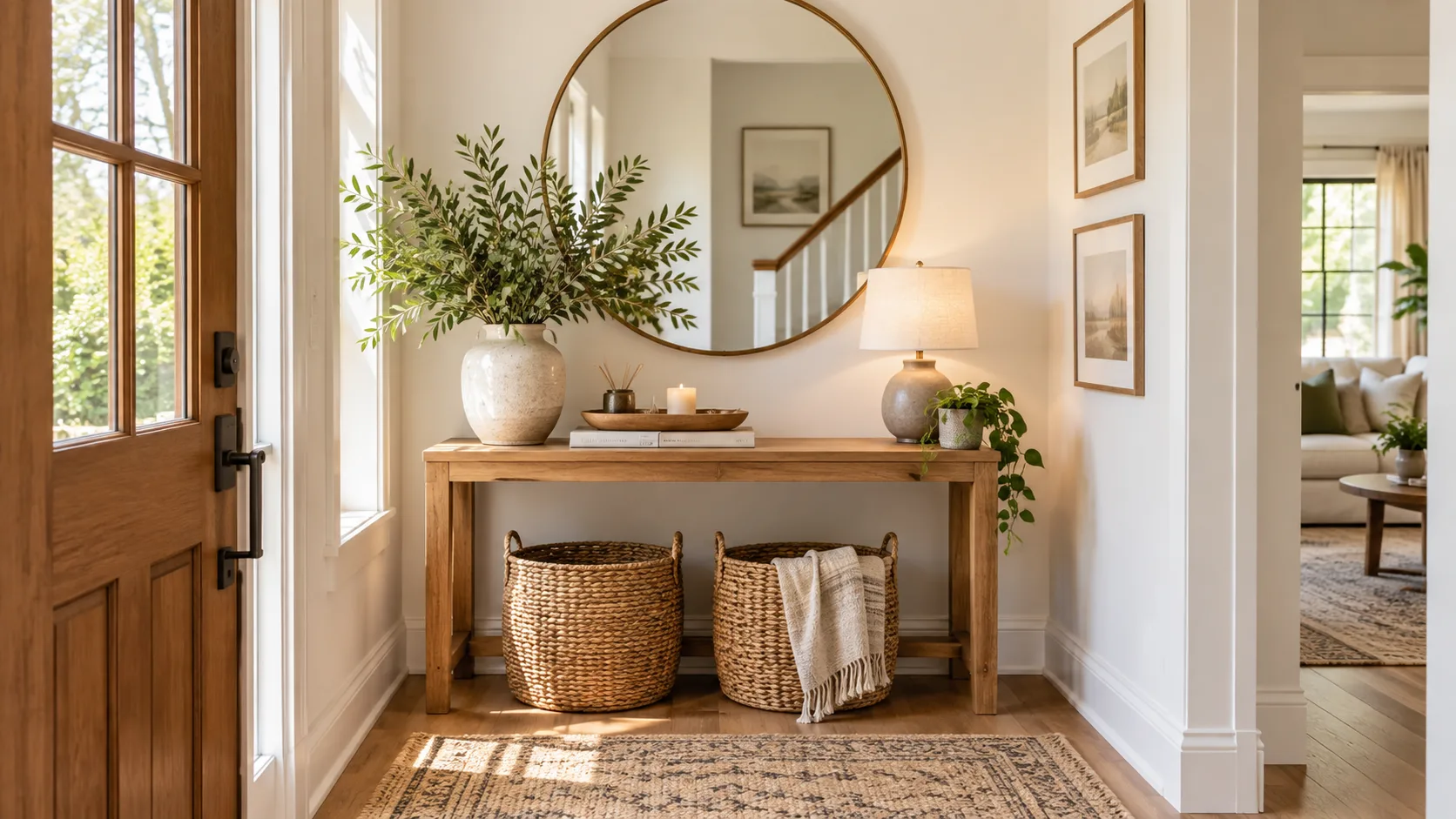
A small entryway may only occupy a few feet, but it shapes the first impression of the entire home. It also handles shoes, bags, keys, mail, and all the little things that tend to collect near the door. When space is limited, every piece needs to be both useful and visually calm.
The good news is that an entryway makeover does not require a major renovation. A clearer layout, better storage, and a few warm decorative details can make even a narrow entrance feel organized and inviting. These ideas will help you improve the space without crowding it.
1. Clear the Entrance Before Decorating
Begin by removing everything from the entryway that does not need to live there. Put away out-of-season shoes and coats, recycle old mail, and relocate bags or household items that have slowly gathered near the door.
Once the area is clear, notice the natural walking path. The door should open fully, and family members should be able to enter without stepping around furniture. This simple reset often reveals that the space needs less decor and more purposeful storage.
2. Choose One Slim Anchor Piece
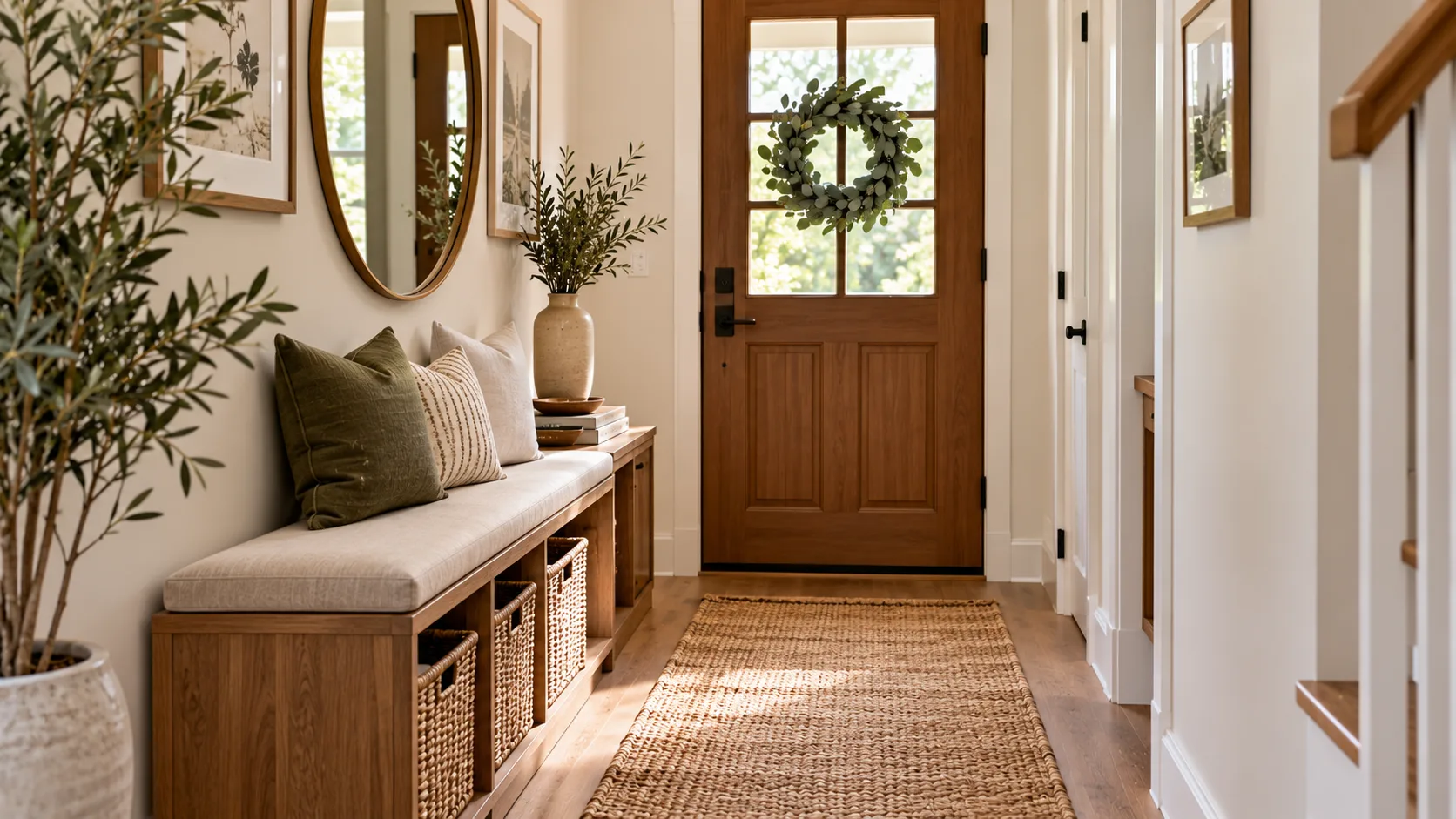
A narrow console table, wall-mounted shelf, or compact bench can give the entryway structure without using too much floor space. Choose one main piece rather than trying to fit several small pieces into the same area.
Measure the wall, the door swing, and the walking path before buying anything. A shallow console works well for keys and mail, while a storage bench is useful when the household needs a place to sit and remove shoes.
3. Use the Wall for Everyday Storage
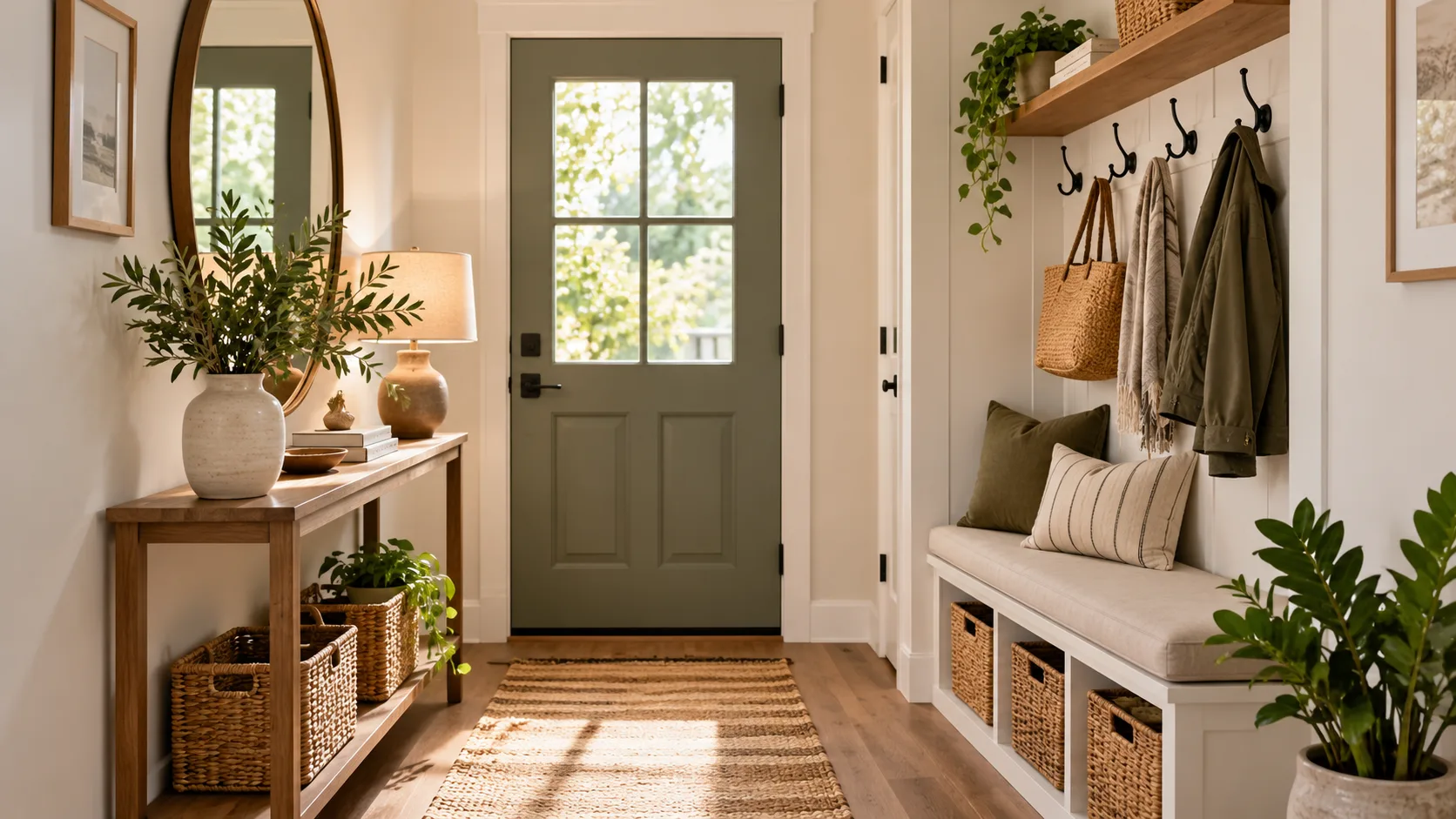
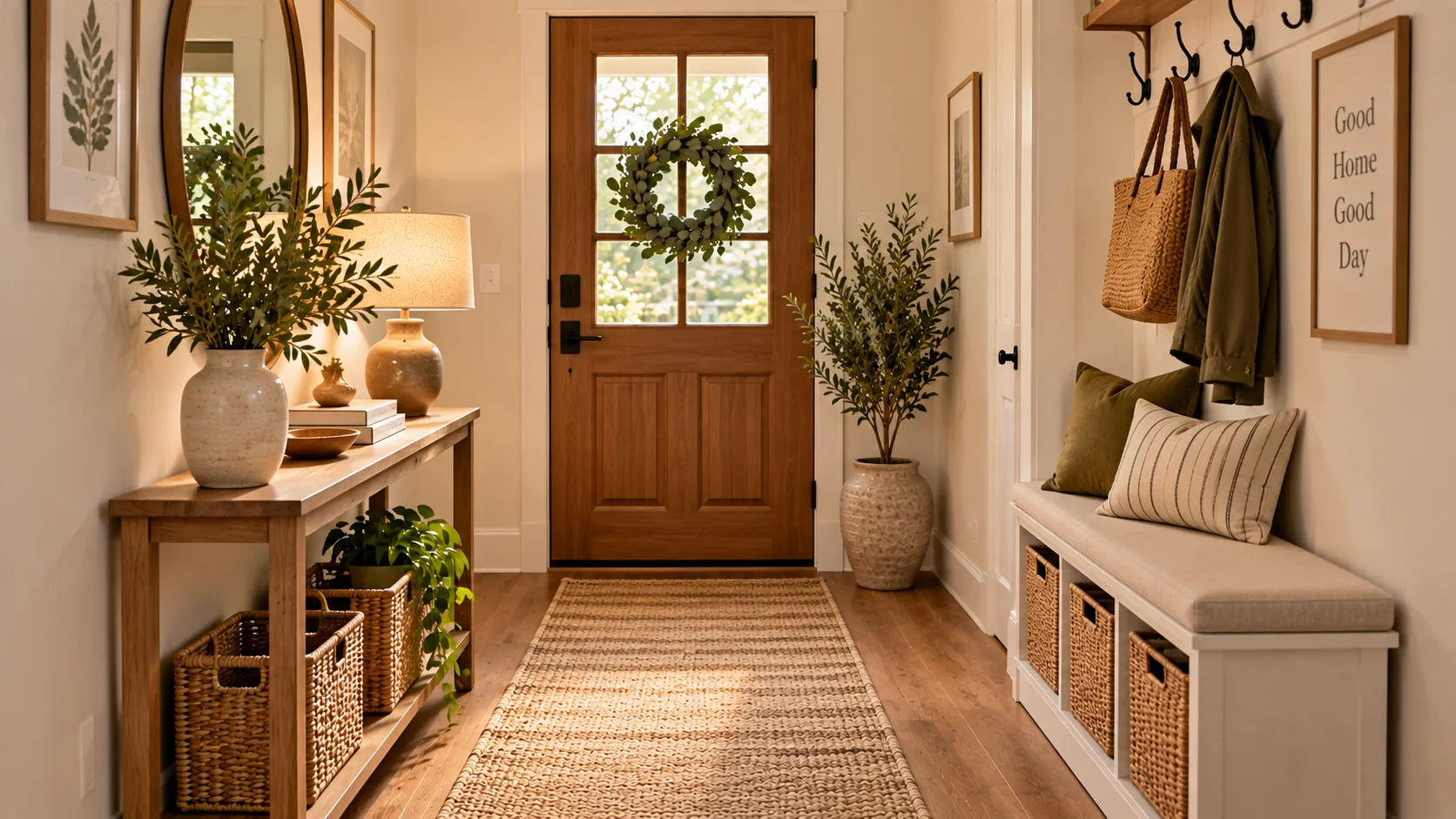
When floor space is limited, move storage upward. Install a row of sturdy hooks for jackets, bags, umbrellas, or dog leashes. Place hooks at heights that work for the people who use the space most often.
A small wall shelf can hold a key bowl and incoming mail. Keep the arrangement simple so the wall does not look busy. Matching hooks and a consistent finish will make practical storage feel like part of the design.
4. Add a Mirror to Open the Space
A mirror reflects light and makes a narrow entryway feel more open. Hang one above a console or place a tall mirror on a safe wall where it will not interfere with the door.
Choose a shape that balances the furniture below it. A round mirror softens straight lines, while a vertical mirror adds height. Position it where it reflects a bright wall, window, or attractive part of the room rather than visible clutter.
5. Create a Simple Drop Zone
Give frequently used items a specific home. A small tray can collect keys and sunglasses, a wall pocket can hold mail, and one labeled basket can contain scarves, hats, or reusable shopping bags.
Avoid creating too many categories in a tiny space. The goal is to make the daily routine easier, not to build a complicated organization system. A few clearly assigned places are usually enough.
6. Control Shoes Without Crowding the Floor
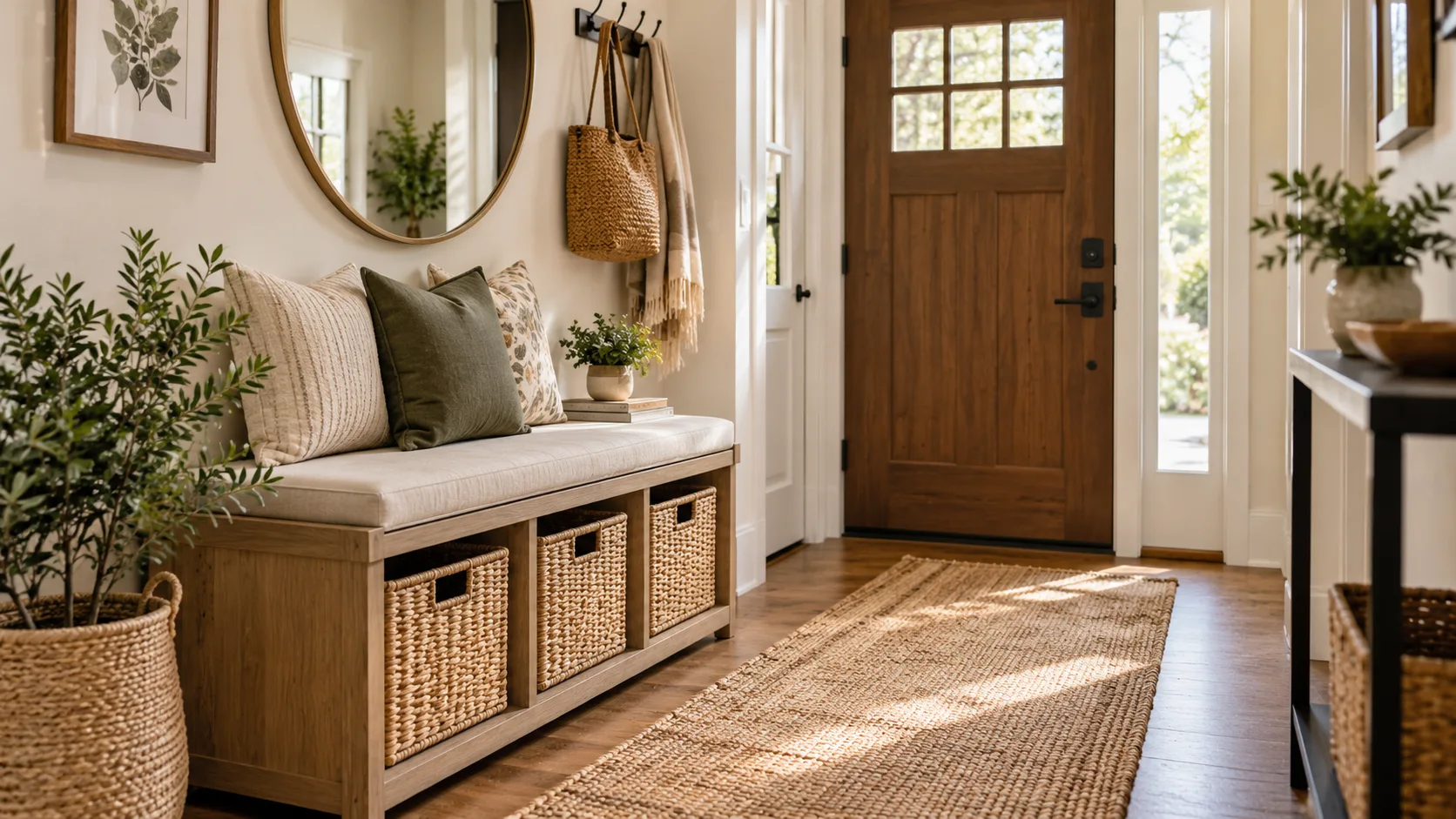
Shoes are often the biggest source of entryway clutter. Keep only the pairs currently used during the week near the door and store the rest elsewhere. A slim shoe cabinet, bench with cubbies, or two matching baskets can keep them contained.
Closed storage creates the calmest appearance, but open storage can work when it is kept tidy. Leave a little empty space so the area does not immediately look full again.
7. Improve the Lighting
A dark entrance can feel smaller than it is. Replace a dim bulb with a warm white bulb that provides enough light, or add a compact table lamp if an outlet is available.
For entryways without a console, a plug-in wall sconce or rechargeable lamp can add light without using floor space. Warm, even lighting makes the area feel welcoming while helping everyone find what they need.
8. Use a Rug That Fits the Walkway
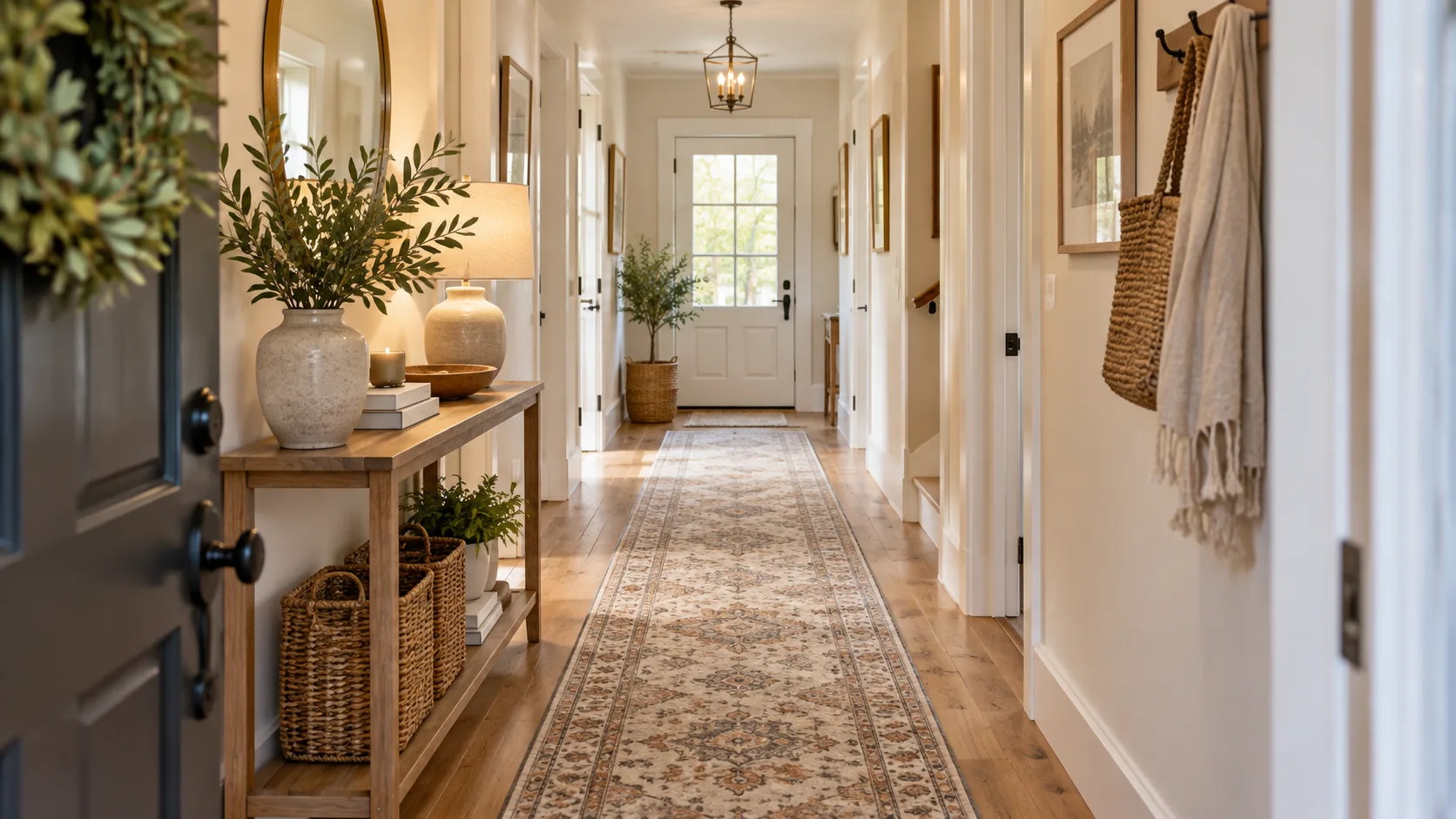
A runner or small low-pile rug adds warmth and defines the entrance. Choose a size that allows the door to open freely and leaves a visible border of flooring around it.
Look for a washable or easy-care material that can handle regular foot traffic. A subtle pattern is practical because it hides small marks while adding character without overwhelming the narrow area.
9. Keep the Color Palette Consistent
Use two or three colors that connect the entryway to nearby rooms. Warm white, natural wood, muted green, black, and soft beige create an easy palette that works with many decorating styles.
Repeating one finish across the mirror, hooks, lamp, or frames creates visual order. The pieces do not need to match exactly, but they should feel related.
10. Finish With One Welcoming Detail
Complete the makeover with one detail that adds personality: a small vase of branches, framed artwork, a candle, or a favorite decorative bowl. One meaningful accent will stand out more than a crowded collection.
Keep enough surface space free for daily use. A beautiful entryway should still give you somewhere to set down your keys when you walk through the door.
Final Thoughts
A successful small entryway is easy to walk through, simple to maintain, and welcoming to come home to. Start by clearing the floor, then add one slim anchor piece, vertical storage, useful lighting, and a few coordinated details.
You do not need to complete everything at once. Fix the biggest daily frustration first, live with the change, and add only what the space truly needs.