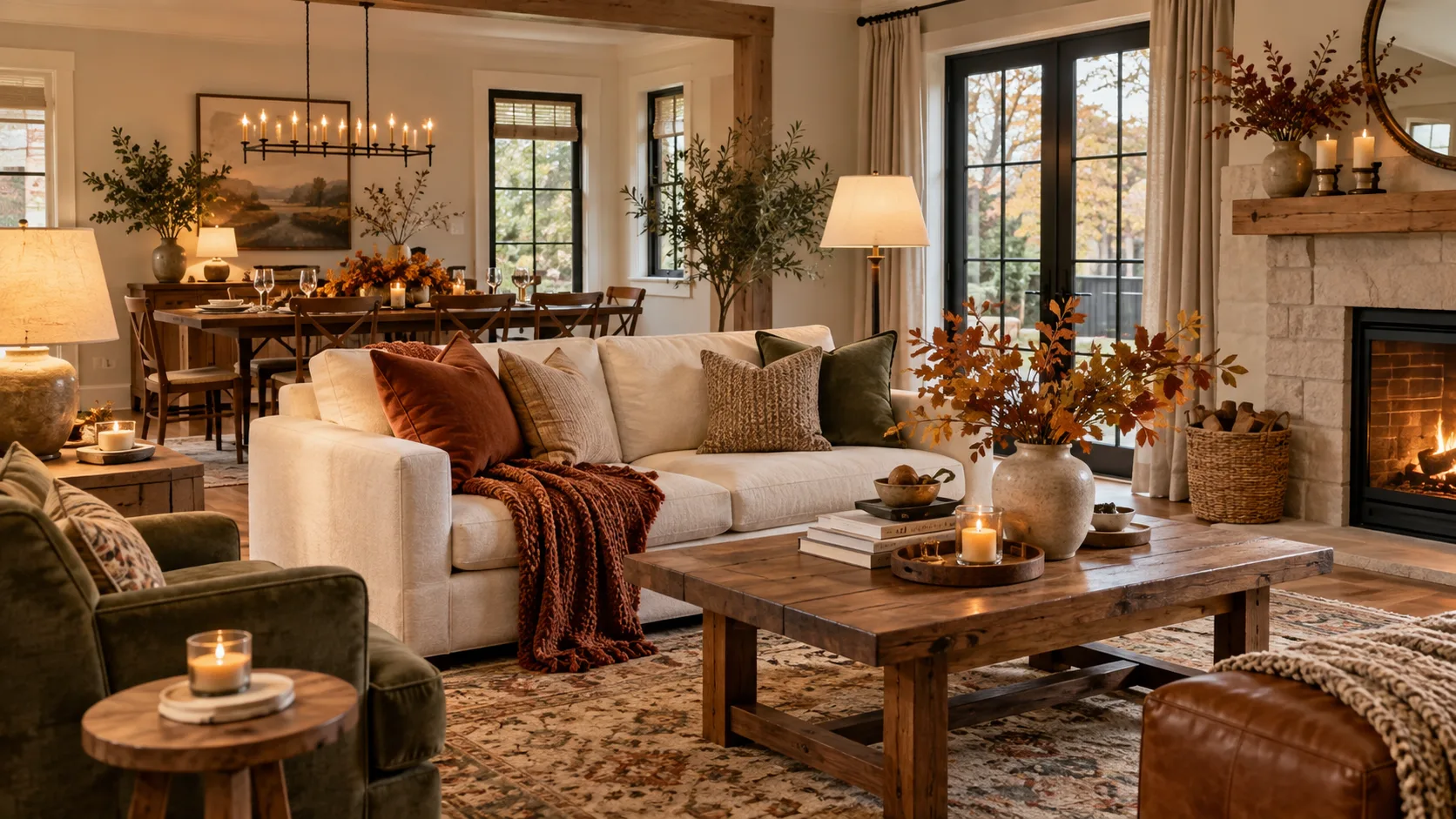
Hosting in fall can make you feel like your home suddenly needs pumpkins on every surface, a perfectly styled dining table, new seasonal dishes, and enough decor to transform every room.
It doesn't.
When guests come over, they are far more likely to notice whether they have somewhere comfortable to sit, whether they know where to place their drink, whether the lighting feels pleasant, and whether the room feels relaxed enough for conversation.
The easiest way to create a cozy fall gathering is to prepare your home for people first and decorate for the season second.
Warm lighting, comfortable seating, a simple place for food and drinks, soft textures, and a few thoughtfully chosen autumn accents can do more than an entire cart of seasonal decorations.
Here is how to make your home feel warm, welcoming, and ready for fall guests without making hosting complicated.
1. Start With Comfort Before You Add Fall Decor
Before decorating, walk through the spaces your guests will actually use.
Look at your entryway, living room, dining area, kitchen, and bathroom from a guest's point of view.
Can someone easily hang a jacket?
Is there somewhere to place a handbag?
Can people move between the sofa, dining table, and kitchen without squeezing around furniture?
Are extra chairs blocking walkways?
A beautiful room can still feel uncomfortable if guests do not know where to sit or where to put their belongings.
For fall hosting, clear unnecessary objects from the main traffic areas before adding seasonal decor.
A small basket near the entrance can hold scarves or gloves. A tray on a console can give guests an obvious place for small belongings. If you have limited floor space, wall hooks may work better than adding another piece of furniture.
Why this works: Removing visual and physical clutter immediately makes a room feel calmer while giving guests more usable space.
Small-home tip: Do not add extra furniture simply because you are hosting. Sometimes moving one small table out of the room creates more comfort than bringing something new in.
2. Use Warm, Layered Lighting Instead of Relying on the Ceiling Light
Lighting is one of the fastest ways to change the atmosphere of a room.
A bright overhead light may be useful when cleaning before guests arrive, but it can make an evening gathering feel flat or overly bright.
Instead, use several smaller light sources around the room.
A table lamp near the sofa, a floor lamp in a darker corner, a lamp on a console, or a few flameless candles can create a softer glow.
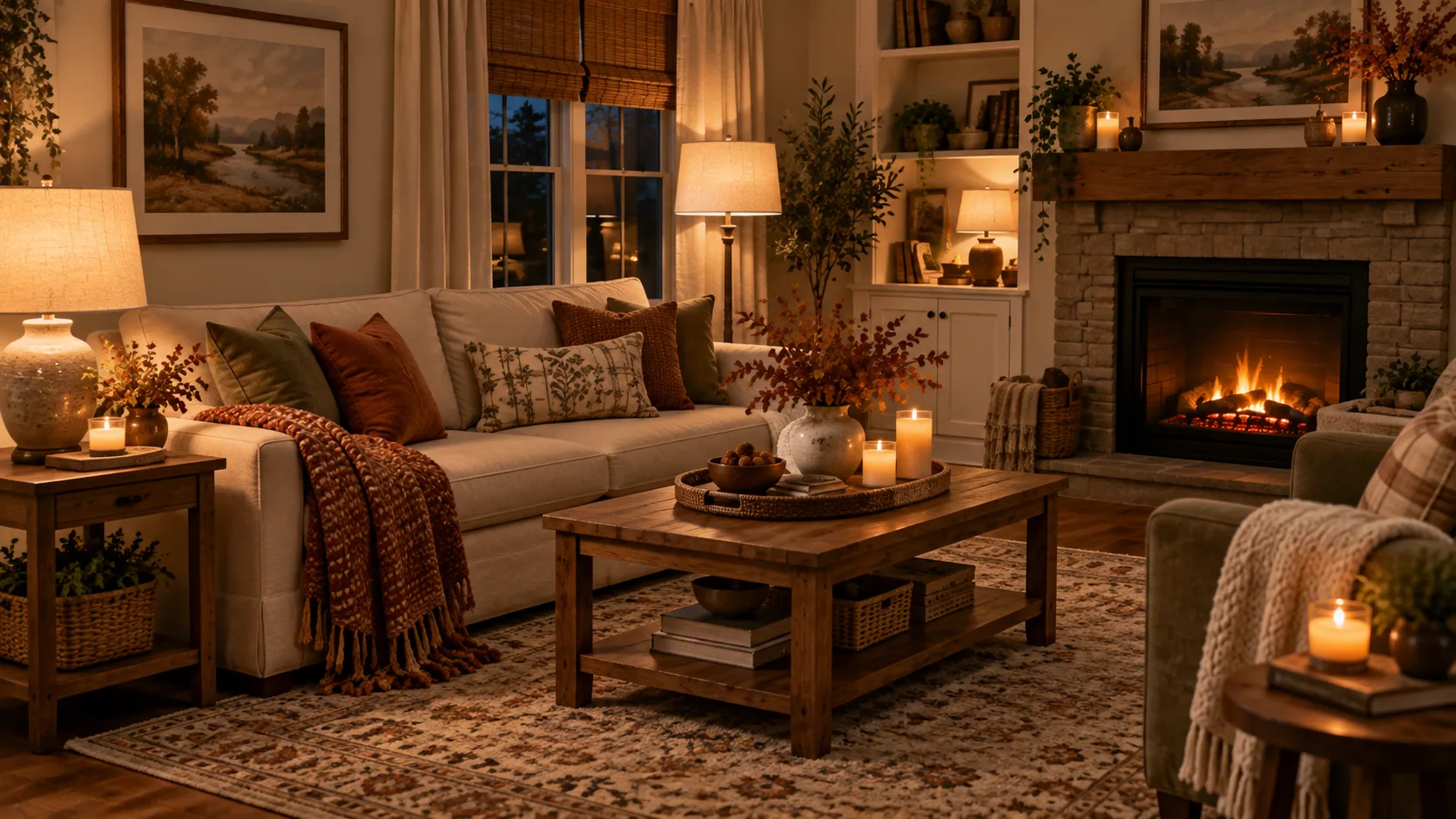
A Flameless Candle Option for Cozy Evenings
Affiliate disclosure: This section contains an Amazon affiliate link. As an Amazon Associate, I earn from qualifying purchases at no additional cost to you.
For a cozy evening glow without an open flame, consider the Luminara Ivory Flameless LED Pillar Candle. Its warm white moving-flame effect can add a soft decorative touch to a coffee table or side table without needing a nearby outlet.
The 3-inch-wide, 4.5-inch-tall candle uses two AA batteries (sold separately) and features an automatic timer that runs for five hours before switching off for 19 hours. It's intended for indoor use. Because its exterior is made from real paraffin wax, keep it away from fireplaces, direct sunlight, and other sources of heat.
If you already have flameless candles that work well, there's no need to replace them. The goal is simply to create a welcoming atmosphere with lighting that suits your home.
Warm-white bulbs around 2700K generally create the cozy atmosphere people associate with fall.
Make Your Existing Lamps Feel Warmer
Before investing in new lamps, consider whether changing your light bulbs could make your space feel more inviting.
The Philips A19 Soft White Dimmable Warm Glow LED Bulbs, 4-Pack offer 800 lumens of brightness and a warm glow that shifts from approximately 2700K toward 2200K as the bulbs are dimmed.
This can be a practical option if you already have lamps that work well in your space. Before purchasing, check your fixture's socket type, wattage limits, and dimmer compatibility. The product information currently contains conflicting E26 and E27 base descriptions, so confirm the correct fit before ordering.
You don't need to replace your existing lamps simply to create a cozier atmosphere.
You do not need every lamp to match. What matters more is that the light feels balanced throughout the room instead of coming from one harsh source above everyone's heads.
Budget alternative: Before buying new lighting, move existing lamps from bedrooms or less-used spaces into the rooms where guests will gather.
3. Choose One Seasonal Focal Point Instead of Decorating Every Surface
A simple fall home usually looks more polished than one where every shelf, table, and counter has seasonal decor.
Choose one main area to carry the autumn theme.
That might be:
- the dining table
- the fireplace mantel
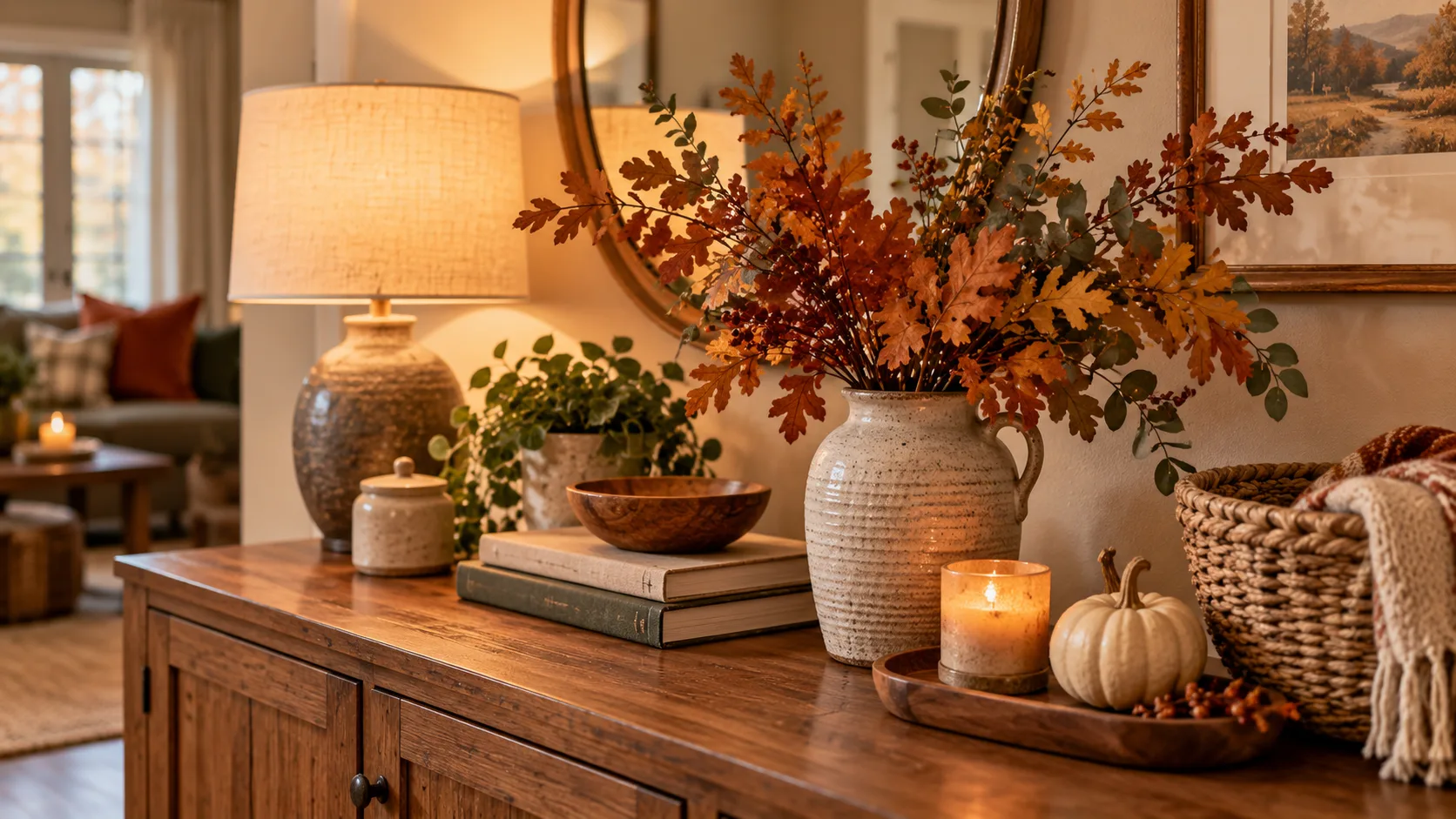
- an entryway console
- the kitchen island
- a coffee table
Then keep the rest of the room quieter.
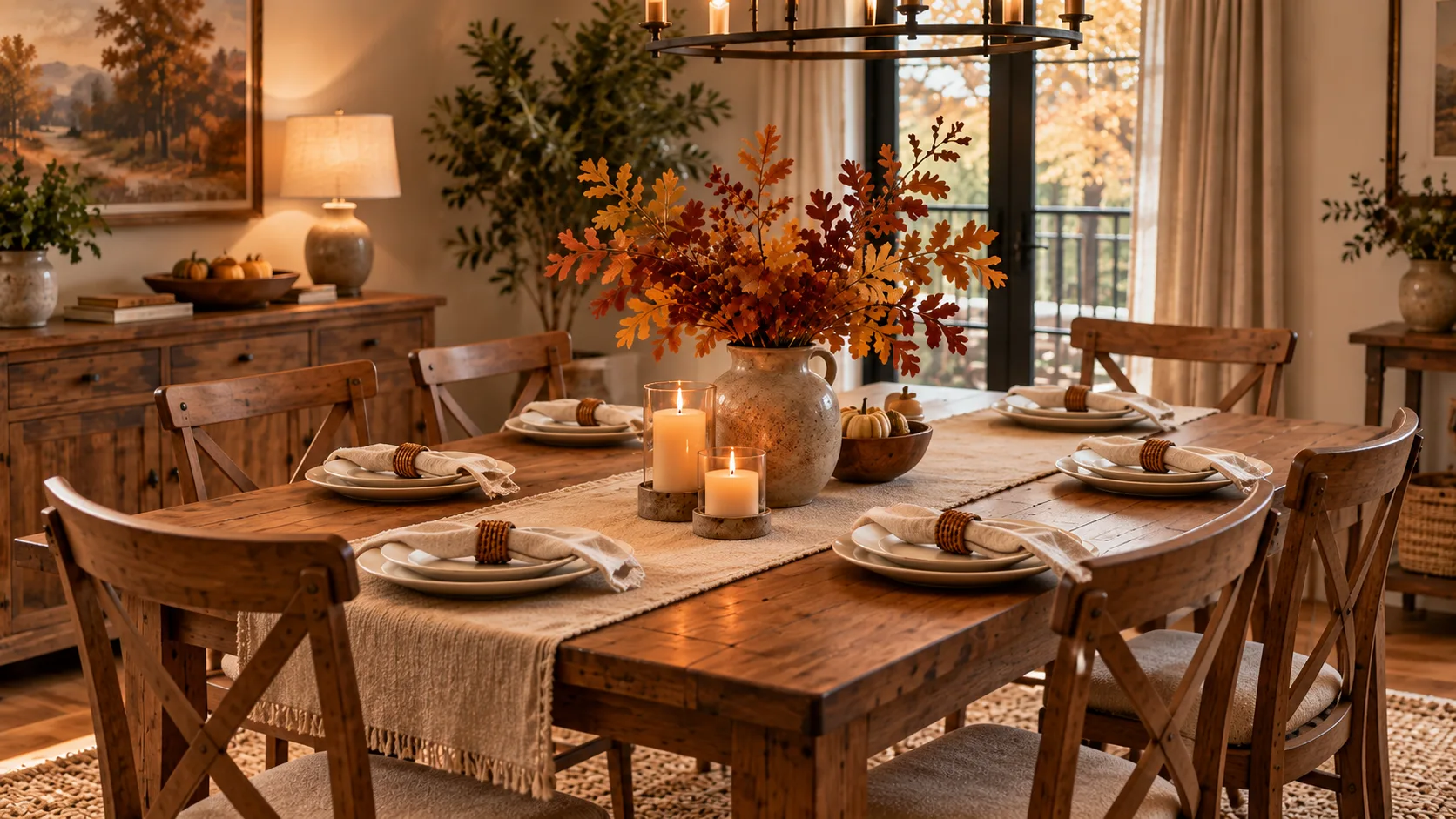
For example, a dining table might have a simple arrangement of leafy branches in a ceramic vase, two candleholders, and a neutral runner.
That is often enough.
You do not need another fall arrangement on the buffet, windowsill, coffee table, kitchen counter, and every shelf.
Why this works: One strong focal point makes seasonal decorating look intentional instead of cluttered.
For a more timeless look, use colors such as cream, camel, muted rust, warm brown, olive, and natural wood rather than relying only on bright orange.
4. Arrange Seating for Conversation, Not Just Appearance
Before guests arrive, look at how people will actually talk to one another.
A living room can photograph beautifully while still being awkward for conversation if every seat faces the television.
If possible, angle an accent chair slightly toward the sofa or pull occasional seating closer to the main conversation area.
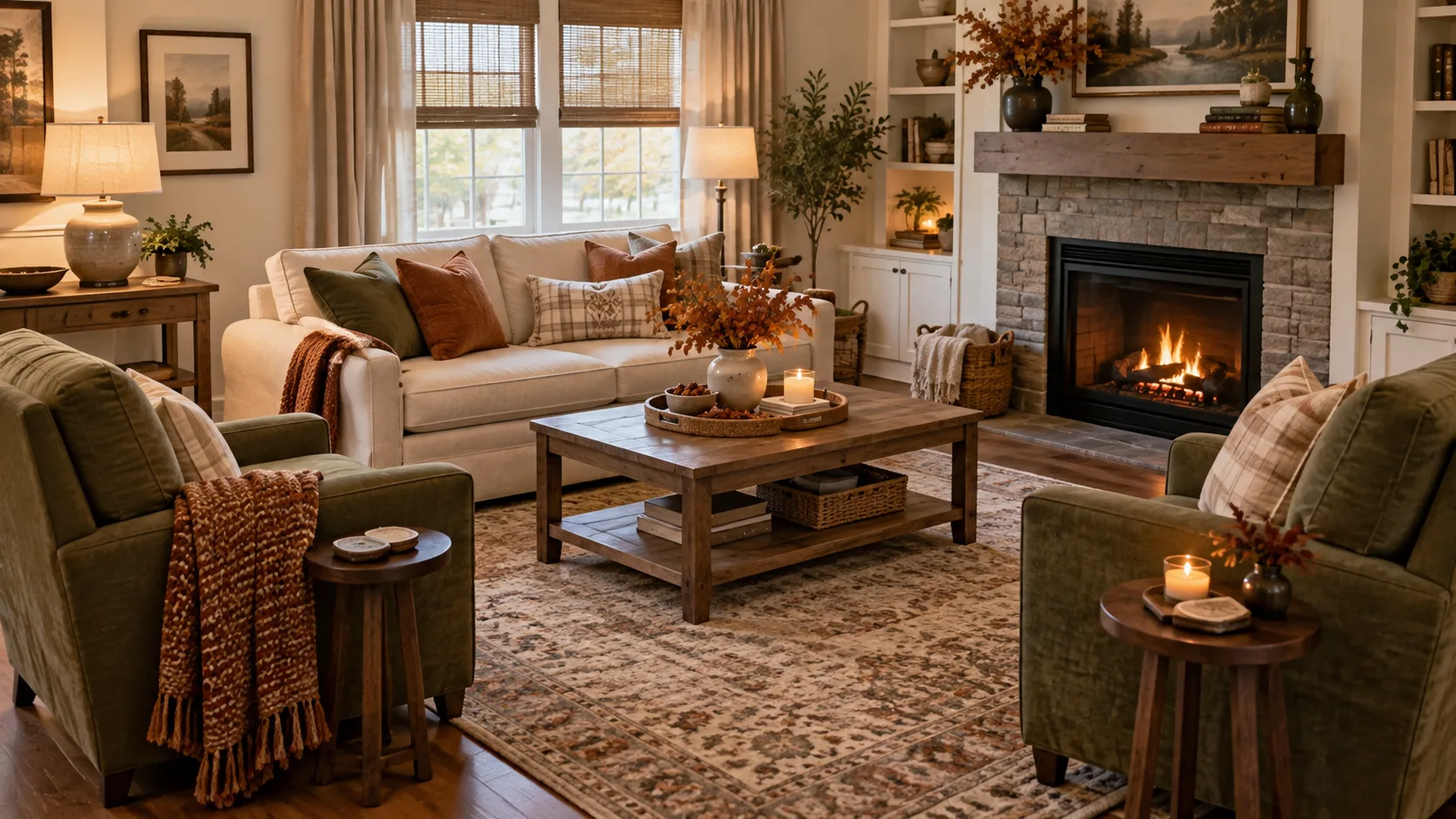
You do not necessarily need matching chairs.
A dining chair, small upholstered chair, or sturdy bench can temporarily join the living room when you have more guests than usual.
Try to keep frequently used walkways open. A comfortable path of roughly 30 to 36 inches is useful where your room allows it, but smaller homes may require some compromise.
The principle matters more than an exact number: guests should not constantly have to ask someone to move so they can get through.
Give Every Seat Somewhere to Put a Drink
This is an easy hosting detail to overlook.
A guest sitting in an accent chair several feet away from the coffee table may spend the entire evening holding a mug or balancing a glass.
Small side tables, nesting tables, or even a sturdy stool used temporarily as a drink table can solve the problem.
5. Add Soft Textures Where Guests Will Actually Use Them
Fall is a natural season for cozy textures, but that does not mean covering every surface with blankets.
Put softness where it serves a purpose.
A throw folded over the sofa gives someone an option if she feels chilly. A cushion can make a firm chair more comfortable. A washable runner can add warmth to a dining area while also protecting the table.
Think about:
- knit or woven throws
- linen-look napkins
- cotton table runners
- textured cushions
- natural woven baskets
Try to repeat only a few textures rather than introducing something different on every surface.
Smart shopper tip: Choose throws and pillow covers in colors you already use in your home. Cream, beige, olive, rust, and warm brown can transition from early fall into winter more easily than highly themed prints.
6. Create a Simple Self-Serve Drink Station
One of the easiest ways to make hosting feel more relaxed is to stop making yourself responsible for every refill.
Create a small drink station where guests can help themselves.
For a fall gathering, this could include coffee, tea, hot chocolate, apple cider, or chilled drinks depending on the weather.
You do not need a dedicated beverage cart.
A section of the kitchen counter, sideboard, console, or dining buffet can work perfectly.
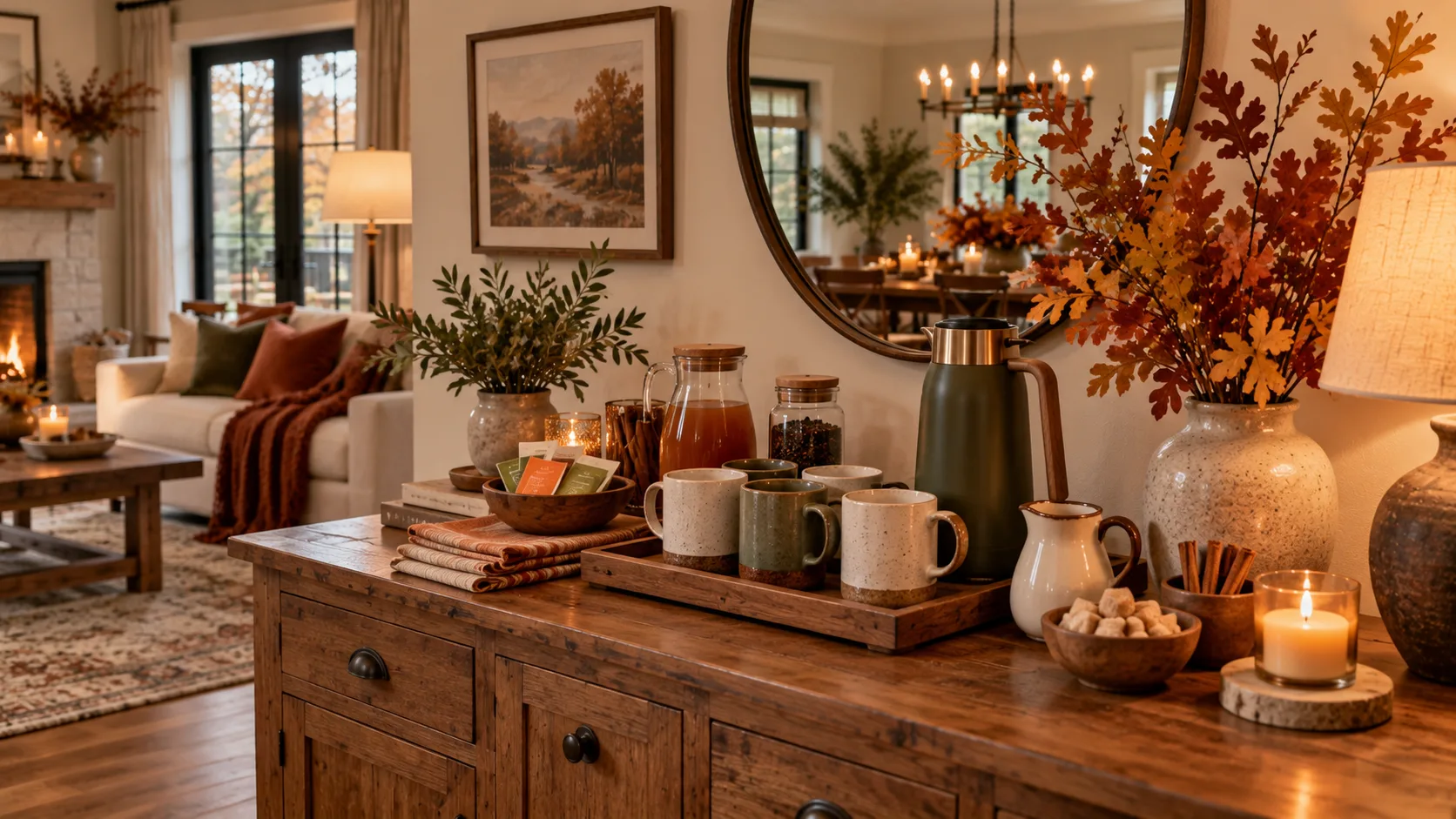
Group the essentials together:
mugs or glasses, napkins, spoons, sweetener, and anything guests may need.
Use a tray if you want the arrangement to feel visually organized.
Why this works: Guests feel comfortable helping themselves, and you spend less time moving back and forth from the kitchen.
7. Keep the Dining Table Pretty Enough to Feel Special but Easy Enough to Use
A fall table does not need a complicated centerpiece.
In fact, a centerpiece that is too tall or too wide can make dinner less comfortable because guests cannot see each other.
Keep the center arrangement low enough for conversation.
You might use:
a simple runner, a vase with branches, a small grouping of candles, or a bowl of seasonal fruit.
Leave enough open space for serving dishes if food will be placed on the table.
If your table is small, skip the large centerpiece altogether. A few narrow candleholders or one small vase may work better.
Do You Need Seasonal Dinnerware?
Usually, no.
Neutral plates are easier to use throughout the year. You can create a fall look with inexpensive layers such as napkins, a table runner, wooden serving pieces, or greenery.
That gives you more styling flexibility without storing another set of dishes for eleven months of the year.
Spend where it matters: Useful serving pieces can earn their storage space because you can use them for birthdays, holidays, Sunday lunches, and everyday meals.
Save where you can: Highly themed plates, glasses, and serving bowls may not be worth buying unless you genuinely love using them every year.
8. Let Food Become Part of the Decor
A table can feel abundant without being heavily decorated when some of the visual interest comes from the food itself.
A wooden board with bread, fruit, cheese, pastries, or appetizers creates warmth naturally.
A bowl of apples or pears can add seasonal color while still being useful.
This works particularly well in smaller homes where you may not have room for both decorative arrangements and serving dishes.
Use your best-looking everyday pieces rather than assuming you need special fall servingware.
Wood boards, white platters, clear glass bowls, and neutral ceramics work beautifully across seasons.
9. Use Fall Scent Carefully
Scent can make a home feel memorable, but it is also one of the easiest hosting details to overdo.
Strong candles, plug-ins, simmer pots, and room sprays used together can quickly become overwhelming, especially for guests who are sensitive to fragrance.
If food is being served, keep the dining area mostly neutral so aromas from the meal are not competing with strong fragrance.
One lightly scented candle near the entryway or living room may be enough.
You can also create atmosphere without fragrance by relying on warm lighting, natural wood, textiles, and seasonal greenery.
The goal is for guests to notice that your home feels comfortable, not to immediately notice the air freshener.
10. Make a Small Home Easier to Host In by Creating Zones
A small house or apartment does not prevent you from hosting.
What matters is preventing everyone from gathering in the same two feet of space.
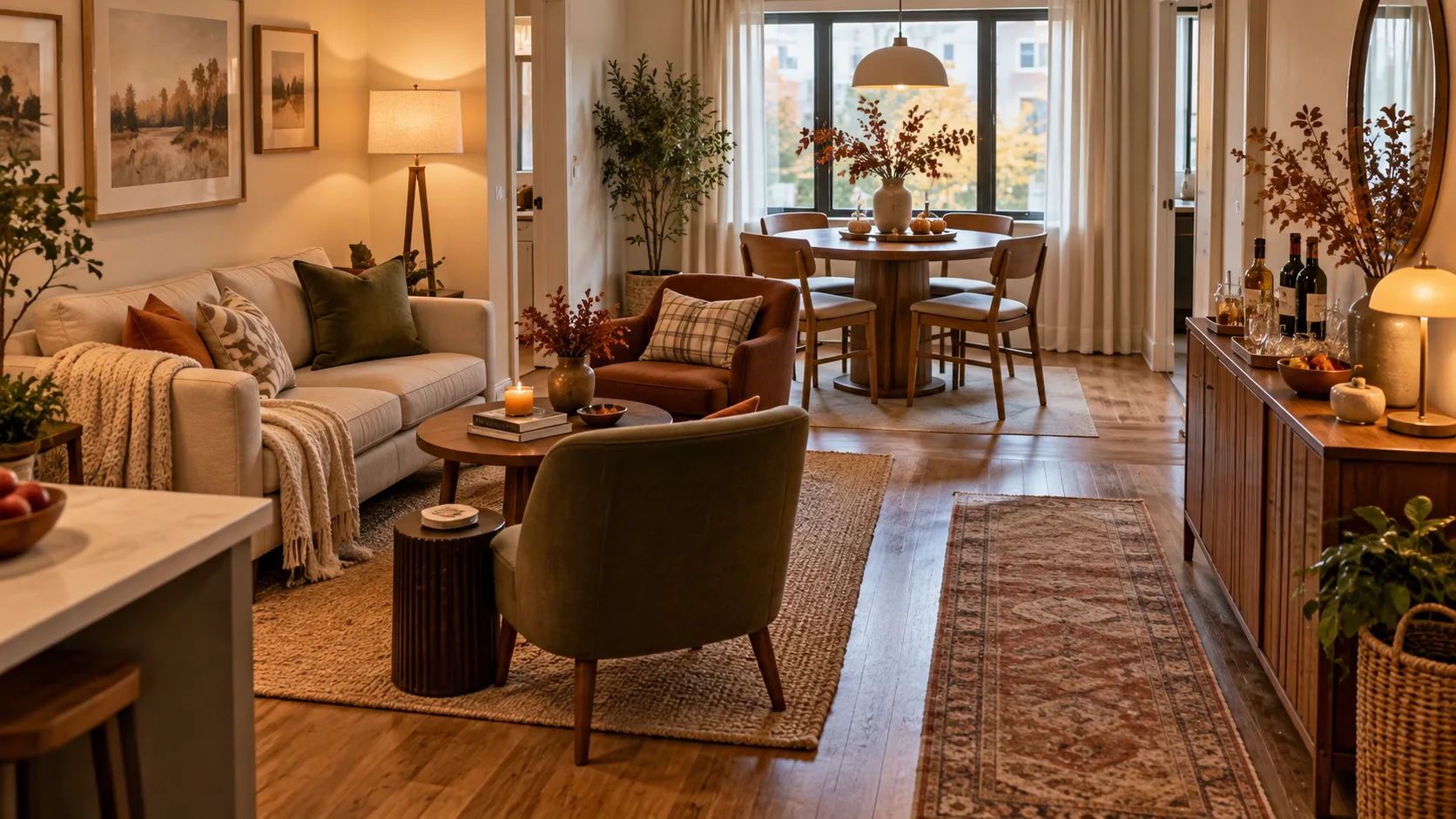
Create simple zones.
One area becomes the conversation zone.
Another holds food.
Another holds drinks.
If coats and bags tend to pile onto dining chairs, create a temporary drop zone in the bedroom or entryway instead.
This keeps functional spaces free.
Watch Your Traffic Flow
Avoid placing your drink station directly beside the food if several people will be serving themselves.
Separating them slightly can prevent a crowd from forming in one spot.
Likewise, avoid putting extra chairs where they block the path between the kitchen and dining area.
Small adjustments often matter more than having a bigger room.
11. Prepare the Guest Areas People Forget
Not every hosting improvement belongs in the living room.
Before guests arrive, check:
the bathroom, entryway, dining area, and any hallway guests will use.
Make sure the bathroom has a clean hand towel, soap, tissues, and enough toilet paper.
Clear enough entryway space for jackets and shoes.
Empty an overflowing trash bin.
Make sure guests can find the bathroom without navigating clutter or closed doors.
None of these things are Pinterest-worthy.
They are still part of creating a welcoming home.
If Your Fall Hosting Budget Is Limited, Prioritize These First
You do not need to decorate the entire house.
If you have a limited budget, work in this order:
First: comfort.
Make sure you have enough practical seating and clear walkways.
Second: lighting.
Warm, layered lighting can change the atmosphere of a room more dramatically than most seasonal decorations.
Third: serving.
Make drinks and food easy to access.
Fourth: textiles.
Bring in a throw, table runner, napkins, or cushion covers if you want more warmth.
Last: seasonal decor.
Add one or two autumn accents after the practical pieces are already working.
This order helps you spend money on things that continue being useful after fall is over.
Smart Shopper Guide for Fall Hosting Decor
Before buying something specifically for fall entertaining, ask yourself three questions.
Will I use this outside fall?
A neutral tray, warm lamp, wooden serving board, or cream throw can stay useful all year.
Do I already own something that can create the same effect?
Before buying another centerpiece, check your vases, baskets, candleholders, trays, and serving pieces.
Will this solve a hosting problem or simply fill a surface?
There is nothing wrong with buying something simply because you love it. But if you are trying to keep your decorating budget under control, functional pieces deserve priority.
Final Styled-Room Inspiration
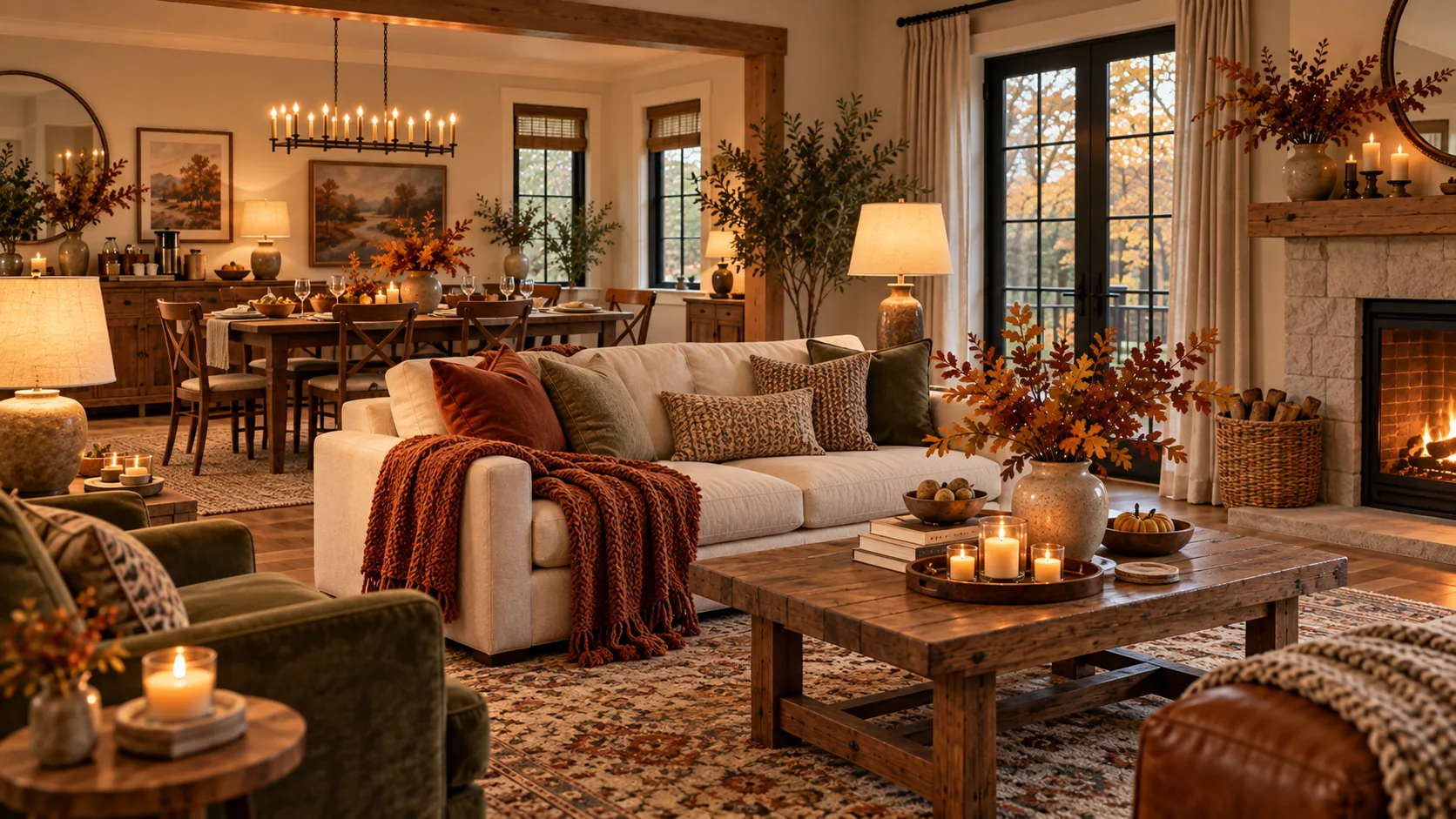
Picture a warm living and dining area on a cool autumn evening.
The overhead light is off.
A floor lamp beside the sofa and two small lamps around the room create pools of warm light.
The sofa has one soft cream throw folded over the arm and cushions in muted olive and rust.
A wooden coffee table holds a small ceramic vase with a few branches rather than a large seasonal display.
Nearby, two chairs have been angled toward the sofa so everyone can join the conversation.
On the dining table, a simple beige runner sits beneath low candleholders and one arrangement of autumn branches.
Neutral plates and linen-look napkins keep the table relaxed rather than formal.
A tray on the sideboard holds mugs and a warm drink so guests can help themselves.
There might be a pumpkin or two somewhere in the room.
But they are not what makes the space feel like fall.
The warm light, natural wood, soft fabrics, easy seating, good food, and people gathered together do that.
That is the kind of fall home worth creating.
Frequently Asked Questions
How can I make my house cozy for fall without buying new decor?
Start with lighting, furniture arrangement, decluttering, and textiles you already own. Move lamps into gathering areas, bring out neutral throws, arrange seating for conversation, and use branches or seasonal fruit as inexpensive natural decor.
How much fall decor should I use when hosting?
There is no required amount. One well-styled focal point is often enough. Concentrate seasonal decor on the dining table, mantel, or entryway rather than spreading small decorations across every surface.
What colors make a home feel cozy for fall?
Warm neutrals and earthy colors work especially well, including cream, camel, warm brown, muted rust, olive, taupe, and natural wood tones. These colors tend to transition well into other seasons too.
How do I host guests in a small living room?
Prioritize clear walkways and flexible seating. Pull chairs toward the conversation area, use small side tables for drinks, and keep food and beverages in separate zones when possible so guests are not crowding one part of the room.
What should I buy first for fall hosting?
If your home is already functional, consider improving lighting or adding versatile serving pieces before buying seasonal decorations. Choose items you can reuse throughout the year whenever possible.
How do you decorate a fall table without making it look cluttered?
Keep the centerpiece low and narrow. A runner, one vase of branches, and a few small candleholders may be enough. Leave room for serving dishes and conversation.
What is the biggest fall hosting decorating mistake?
Prioritizing decorations over guest comfort. A heavily styled room will not feel welcoming if there is nowhere comfortable to sit, nowhere to place a drink, or too little space to move around.