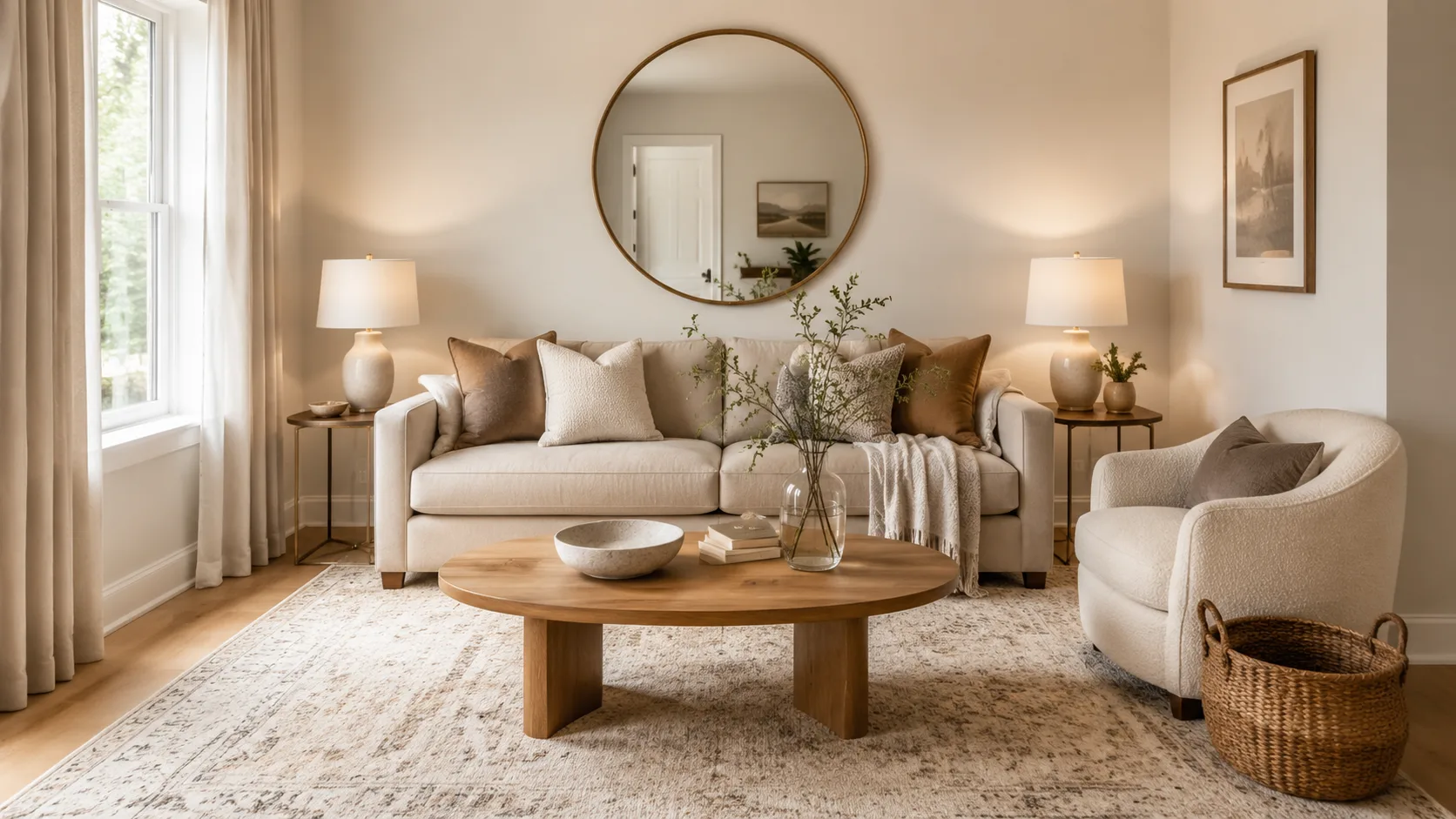
A home can look polished and thoughtfully designed without being filled with costly furniture or designer accessories. What often makes a room appear expensive is not the price of each item, but the way the space is edited, arranged, and finished.
Good lighting, proper scale, a consistent color palette, and uncluttered surfaces can elevate pieces you already own. These affordable decorating ideas will help you create a more refined home while keeping your budget under control.
1. Remove Visual Clutter First
One of the most effective upgrades is also free. Clear crowded countertops, tangled cords, overflowing shelves, and decorative items that no longer add meaning to the room.
This does not mean the home should feel empty. Select the pieces you genuinely enjoy and give them space to stand out. Store smaller everyday items in baskets, drawers, or decorative boxes so each room feels calmer and more intentional.
2. Create a Cohesive Color Palette
Rooms tend to look more polished when the colors relate to one another. Choose two or three main neutrals, then repeat one or two accent colors throughout the home.
You can create cohesion without purchasing new furniture. Use pillow covers, throws, artwork, books, and small accessories to repeat the palette. Warm white, beige, taupe, black, natural wood, and muted green create an elevated combination that works with many decorating styles.
3. Improve the Lighting
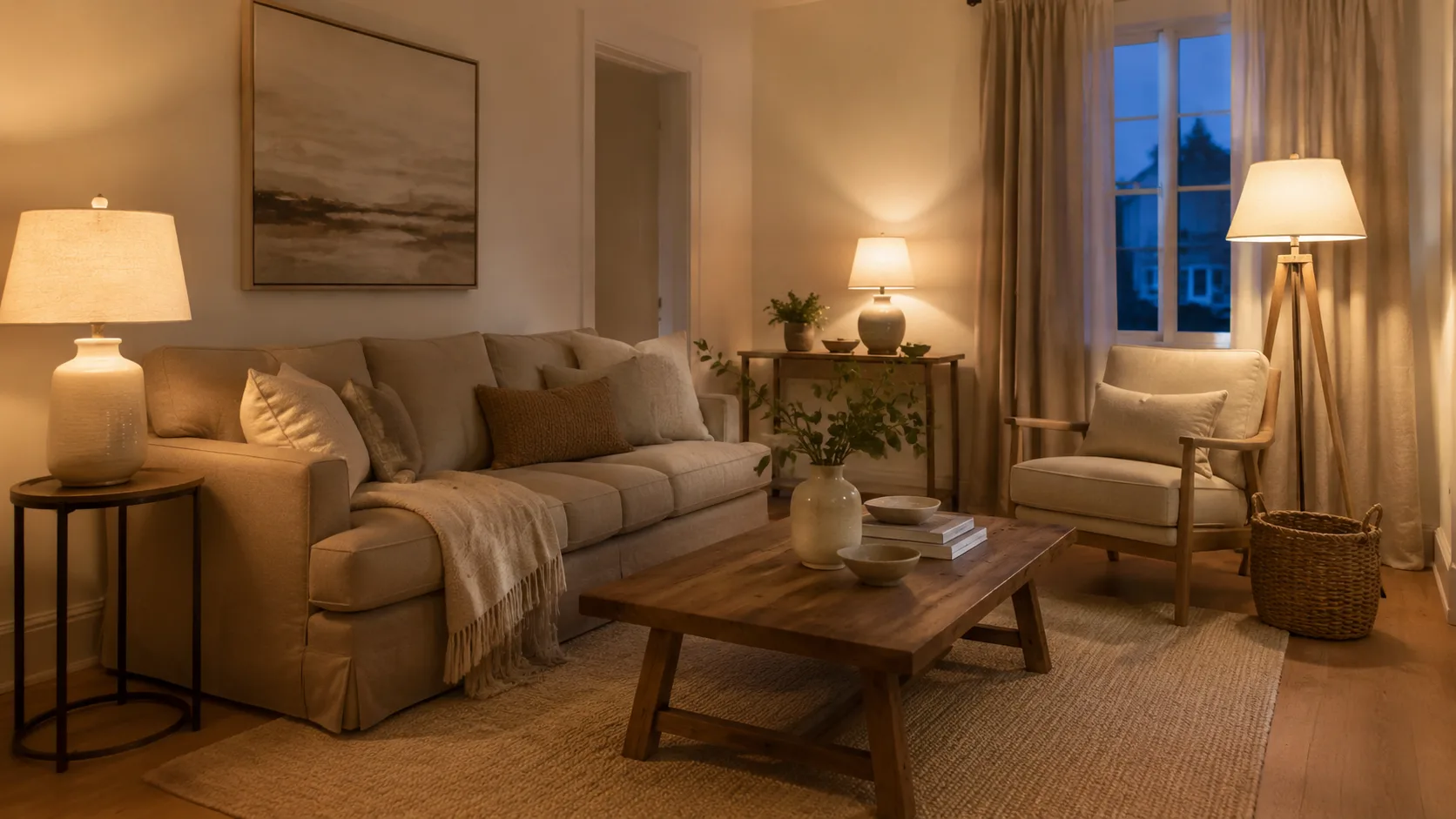
Harsh overhead lighting can make even a beautiful room feel flat. Layer table lamps, floor lamps, and small accent lights to create warmth and depth.
Replace mismatched or cool bulbs with warm white bulbs of a similar color temperature. Lamps placed at different heights will make the room feel considered. A simple lampshade update can also refresh an older lamp at a much lower cost than replacing the entire fixture.
4. Hang Curtains Higher
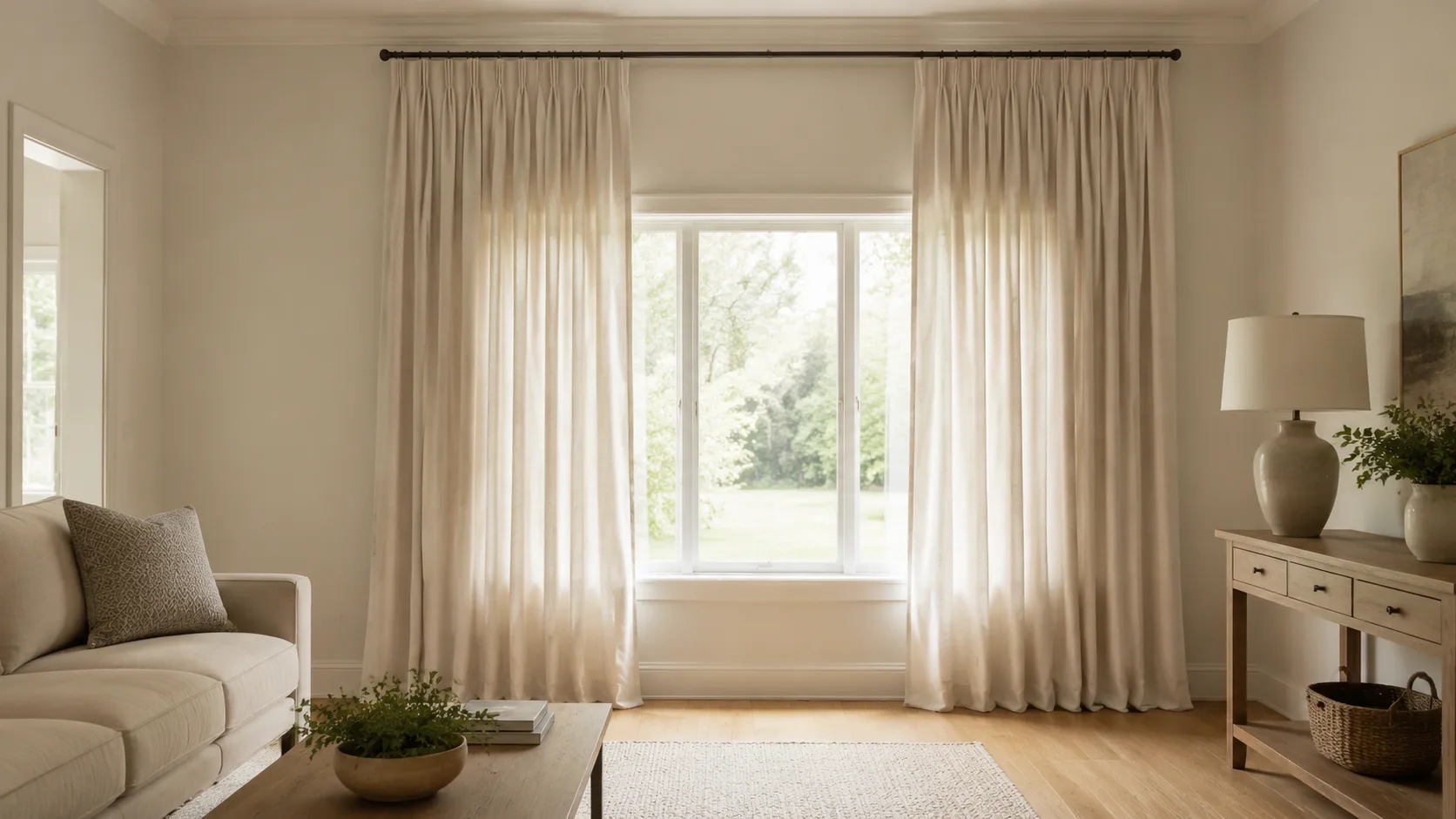
Curtains mounted just above the window can make the wall feel shorter. Hang the rod closer to the ceiling and extend it beyond the sides of the frame to make the windows appear taller and wider.
Choose panels that nearly reach the floor and use enough fabric to look full when closed. Solid linen-look curtains in a neutral shade often appear more timeless than thin, shiny, or overly patterned materials.
5. Choose Fewer, Larger Decorative Pieces
Many small accessories can make a room look cluttered. A few larger pieces usually create stronger visual impact and a more confident design.
Instead of arranging several tiny frames above a sofa, try one substantial piece of artwork or a well-spaced gallery wall. Replace a collection of small tabletop objects with a larger vase, sculptural bowl, or stacked books. Scale helps inexpensive pieces feel more intentional.
6. Mix Materials and Textures
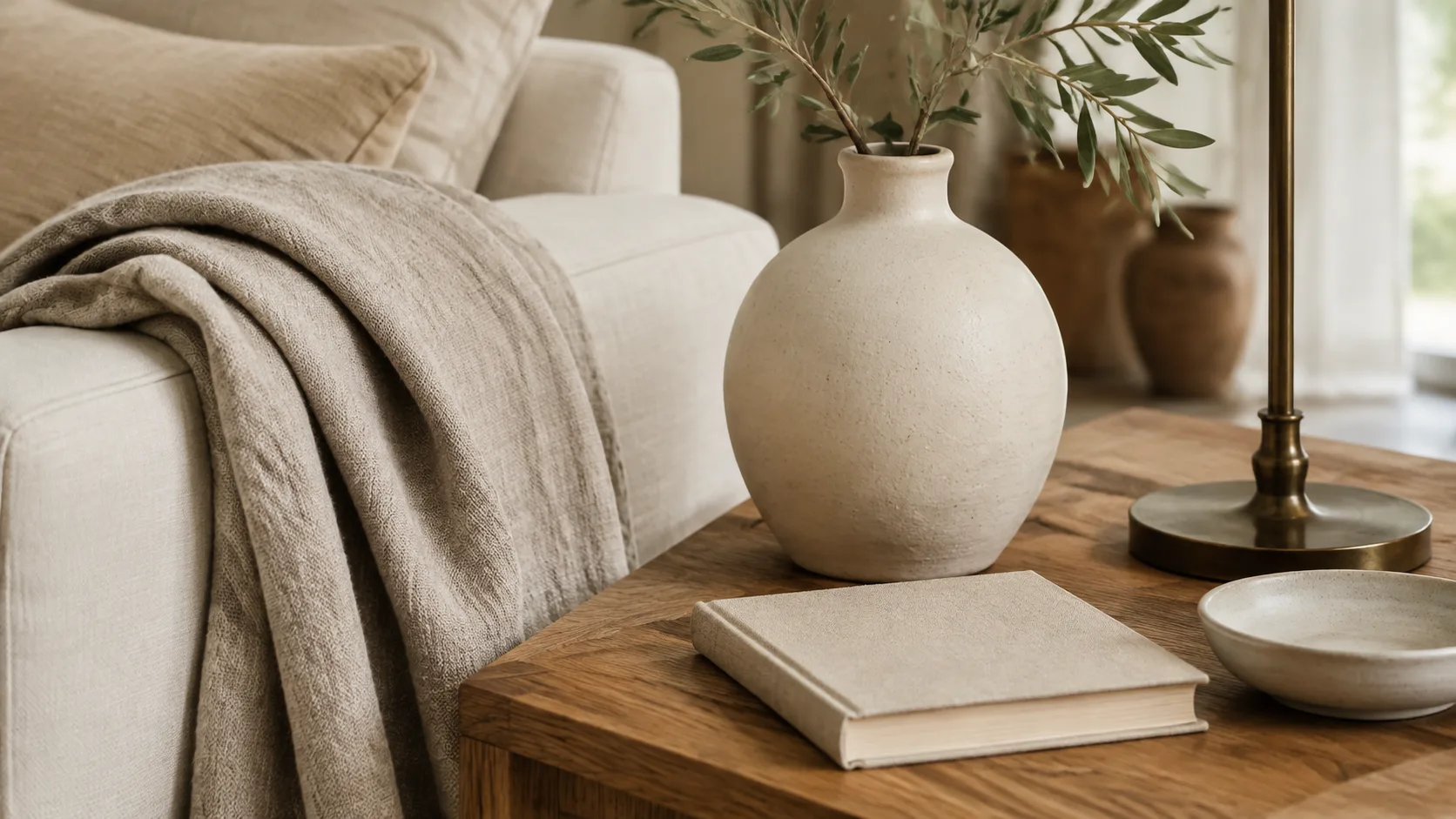
A layered combination of wood, glass, metal, ceramic, linen, and woven fibers gives a room richness. Everything does not need to match, but the mix should feel balanced.
For example, pair a wooden coffee table with a ceramic vase, linen pillows, and a metal lamp. The contrast between smooth and textured surfaces creates depth that a room filled with one material often lacks.
**7. Update Small Hardware
Cabinet knobs, drawer pulls, and bathroom hardware are small details that can influence the look of an entire space. Replacing dated or mismatched hardware can make furniture and cabinetry feel more current.
Choose one finish that works with the room, such as matte black, aged brass, brushed nickel, or warm bronze. Measure the existing holes before purchasing replacements to avoid unnecessary drilling.
8. Style Surfaces in Simple Groups
Decorative groupings look more polished when they include varied heights and shapes. On a coffee table, combine a low tray, a medium stack of books, and one taller vase or candle.
Use an odd number of objects when it feels natural, but avoid rigid rules. The arrangement should leave enough open space for the surface to remain useful. A home looks more luxurious when it also works comfortably for everyday life.
9. Add Greenery
Plants and simple branches can make a room feel fresh and finished. A tall plant fills an empty corner, while a small arrangement adds softness to a table or shelf.
Fresh greenery from the yard can be displayed in a simple vase at little or no cost. If live plants are difficult to maintain, choose one realistic faux plant rather than several inexpensive-looking artificial arrangements.
10. Use Matching Storage
Visible storage looks more elevated when containers share a material or color. Matching baskets, neutral boxes, and coordinated jars can turn practical organization into part of the decor.
You do not need to purchase everything at once. Begin with the most visible shelf or counter, then add matching pieces gradually as the budget allows.
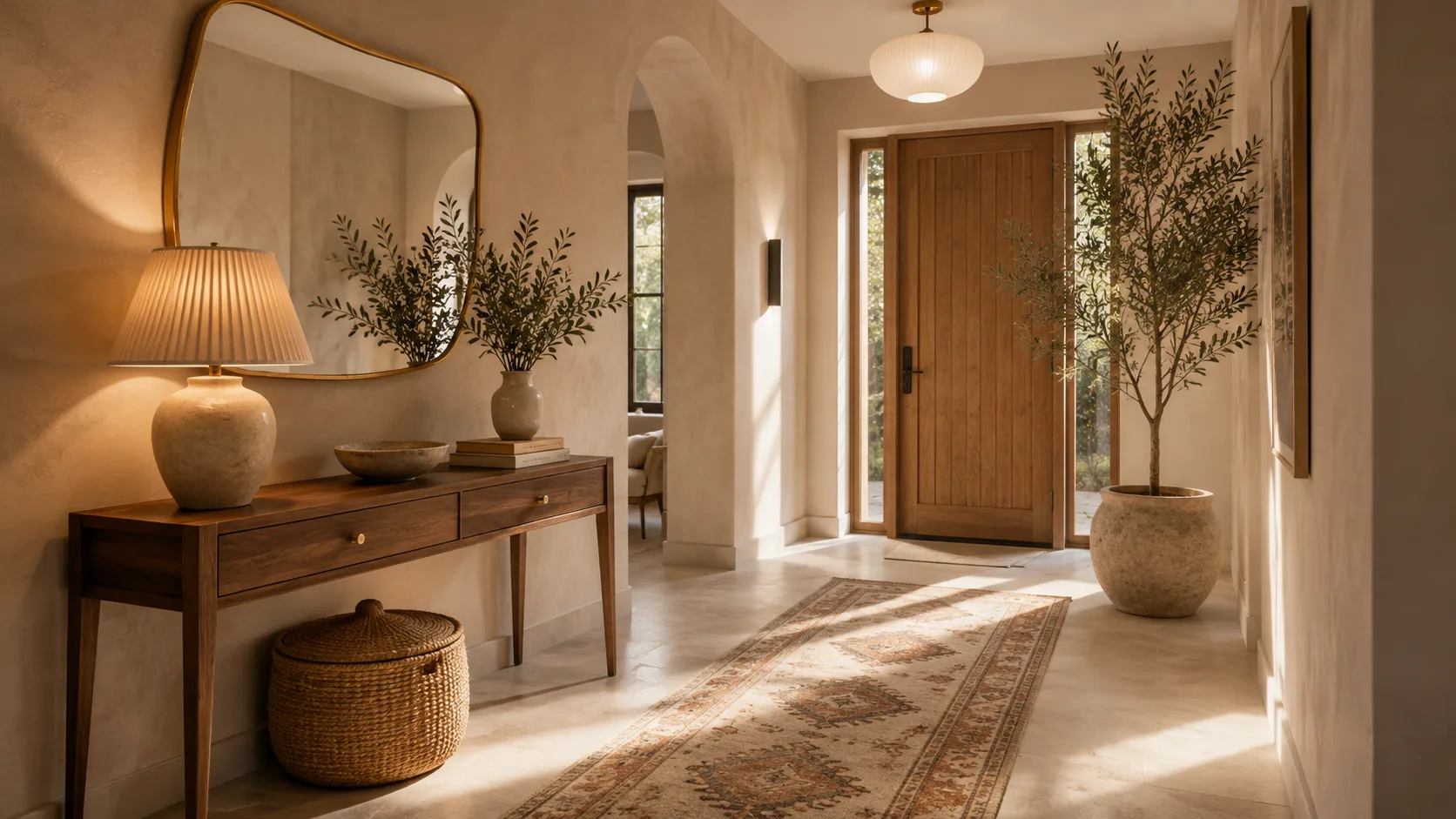
**11. Give the Entryway a Finished Look
The entryway creates the first impression of a home. Keep it simple with a small console or bench, a mirror or artwork, and one practical place for keys or shoes.
Even a narrow entrance can feel polished when the items are arranged intentionally. A clean doormat, a lamp, and a small branch in a vase can make the space feel welcoming without requiring a large investment.
12. Shop Your Home Before Buying New Decor
Move artwork, lamps, mirrors, and accessories between rooms before deciding that you need something new. A piece that feels overlooked in one room may become the perfect focal point in another.
Try restyling with what you own, take a photograph, and live with the arrangement for a few days. This slower approach prevents impulse purchases and helps you understand what the room actually needs.
Where to Spend and Where to Save
Spend more on pieces that support daily comfort and receive heavy use, such as a supportive sofa, a quality mattress, or durable dining chairs. Save on decorative items that are easy to change, including pillow covers, trays, vases, seasonal accents, and small artwork.
The most expensive-looking rooms often mix investment pieces with affordable finds. A thoughtful combination is more personal and practical than purchasing everything from one collection.
Final Thoughts
Making a home look more expensive is really about making it feel more deliberate. Clear what is distracting, improve the lighting, use the right scale, and repeat colors and materials so the rooms feel connected.
Start with the free changes, then add affordable upgrades slowly. A polished home is not created by the price tags. It is created by thoughtful choices and attention to detail.