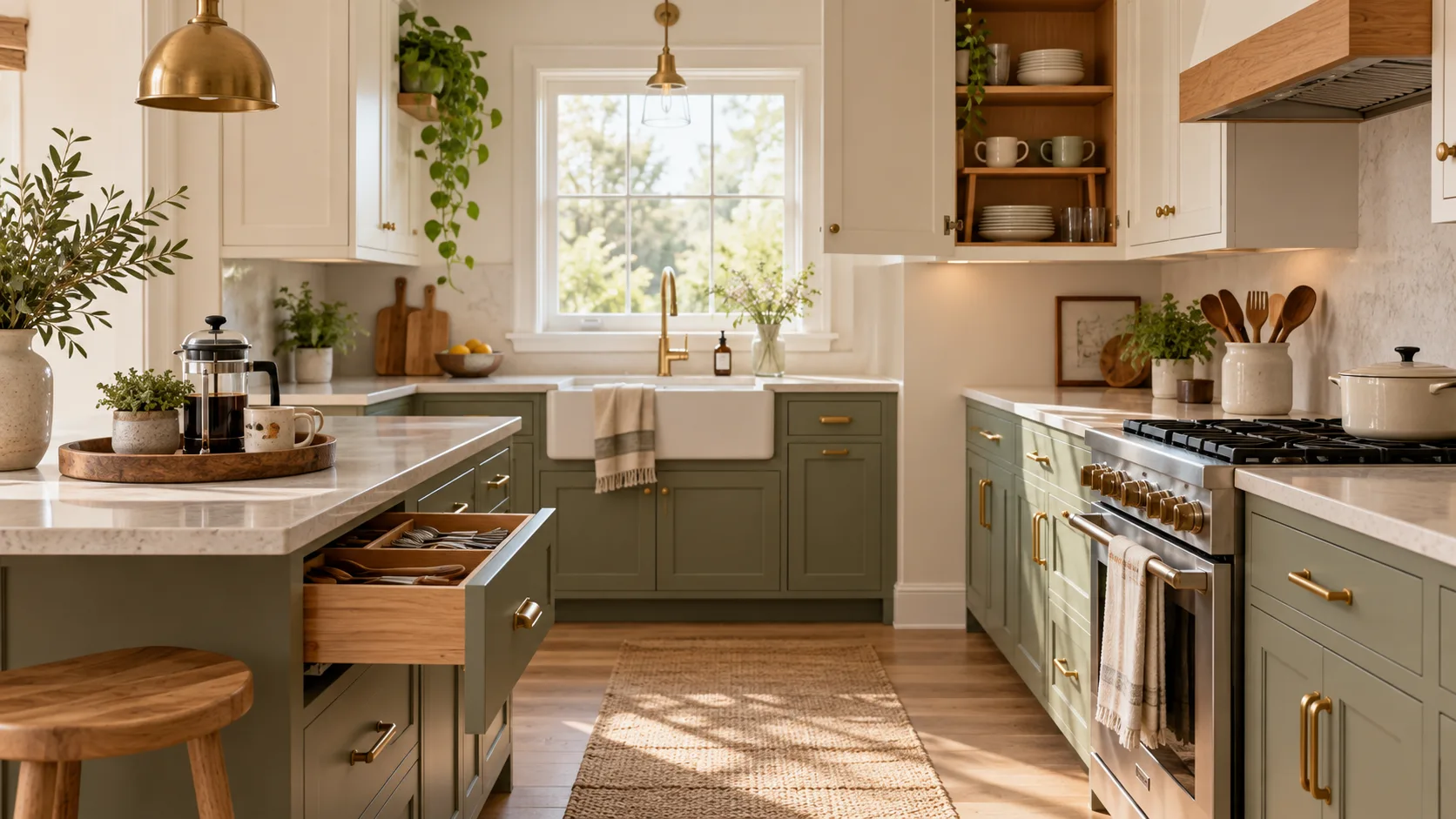
A sale can make almost any organizer look useful. The harder question is whether it will actually solve a problem in your kitchen.
In a small kitchen, every organizer takes up space before it saves space. A shelf riser that doubles cabinet capacity can be a smart buy. A bulky countertop rack that simply moves clutter into a taller pile may not be.
If you are watching October sales, start with the problem, measure the space, and then look for the simplest organizer that fixes it. These are the categories worth watching and the details that matter before you add anything to your cart.
What to Buy First, What to Reuse, and What to Skip
Buy first: Solve the daily problem that bothers you most. Choose a shelf riser for inaccessible stacked dishes, a vertical divider for awkward baking sheets, or a handled bin for items lost at the back. Measure before choosing.
Reuse: Try an existing tray, clean bin, or adjustable cabinet shelf before ordering replacements. You can organize original spice jars without purchasing a matching jar collection.
Skip: Matching sets for every shelf, oversized countertop racks, and a rolling cart without a clear parking spot. Extra storage is not helpful if it makes cooking, cleaning, or opening an appliance harder.
Start small: Reset one cabinet or drawer. Keep the change only if it makes your routine easier.
Start With the Kitchen Bottleneck, Not the Sale Page
Before shopping, spend ten minutes noticing where your kitchen becomes frustrating.
Maybe plates are stacked so high that you have to lift half the pile to reach one dish. Perhaps spices disappear behind each other, food-storage lids fall over, or the countertop is crowded with items you use every morning.
Write down the two or three problems that interrupt your routine most often. Those become your shopping list.
A useful organizer should do at least one of three things: make an item easier to reach, use previously wasted space, or give a frequently used item a clear home. If it does none of those, a discount does not make it useful.
1. Shelf Risers for Tall Cabinet Spaces
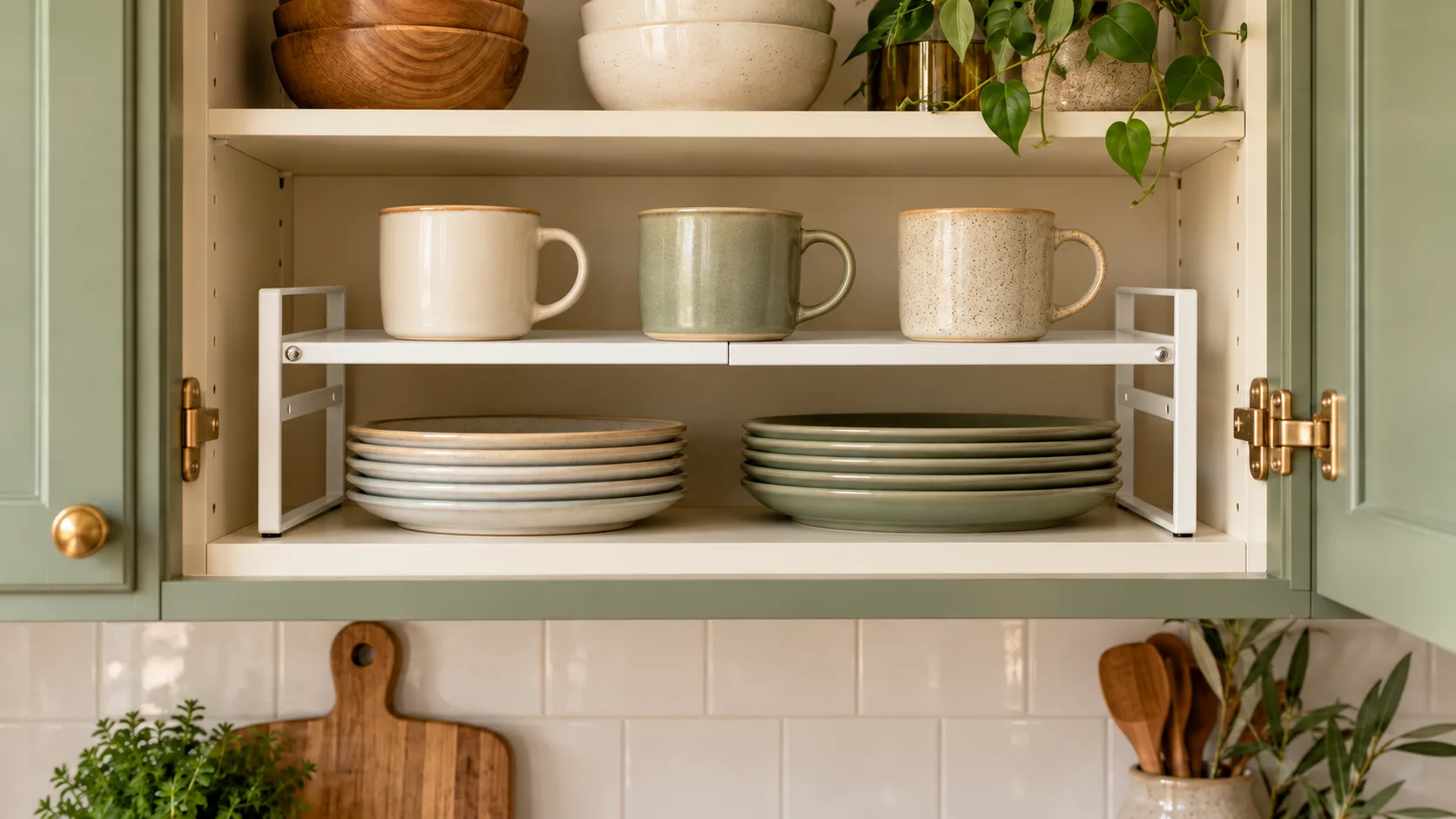
Kitchen cabinets often waste vertical space. A shelf riser creates a second level so short items do not have to be stacked precariously.
They work especially well for plates, bowls, mugs, pantry cans, and small food containers.
What to check before buying
Measure the cabinet's interior width, depth, and usable height. Then measure the items that need to fit both below and above the riser.
Look for a stable frame with feet that will not slide easily. An expandable riser can be helpful when cabinet widths vary, but only if its adjustment mechanism stays rigid under weight.
Avoid buying a riser so tall that the upper level becomes difficult to reach. The goal is easier access, not simply fitting more objects into the cabinet.
Budget alternative: Before buying anything, try moving rarely used pieces to a higher shelf. Sometimes editing the cabinet creates enough room without another product.
2. Pull-Out Bins for Deep Cabinets
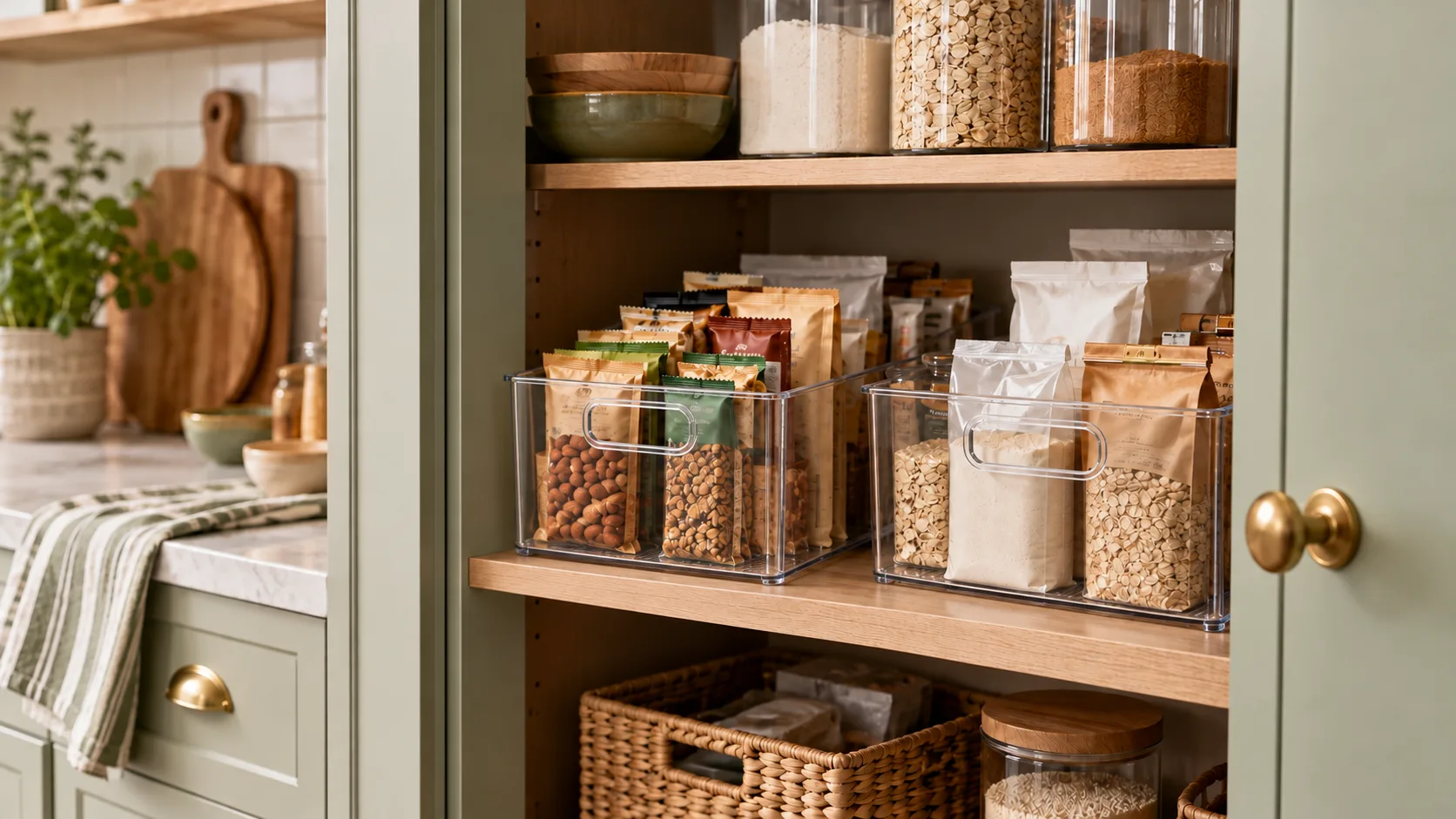
Deep cabinets can hold plenty but still function badly because items at the back disappear.
A handled bin or shallow pull-out basket lets you bring a whole category forward at once. Use one for baking supplies, snacks, packets, cleaning products, or food-storage accessories.
Choose bins based on the cabinet opening, not the exterior cabinet width. Hinges, pipes, door frames, and shelf supports can reduce usable space.
Clear bins make contents easy to see. Opaque or woven-look bins can look calmer in open storage, but labels become more important.
Do not fill every shelf with bins just because matching sets look tidy online. Use them where pulling a category forward genuinely improves access.
3. A Compact Countertop Organizer for Daily-Use Items
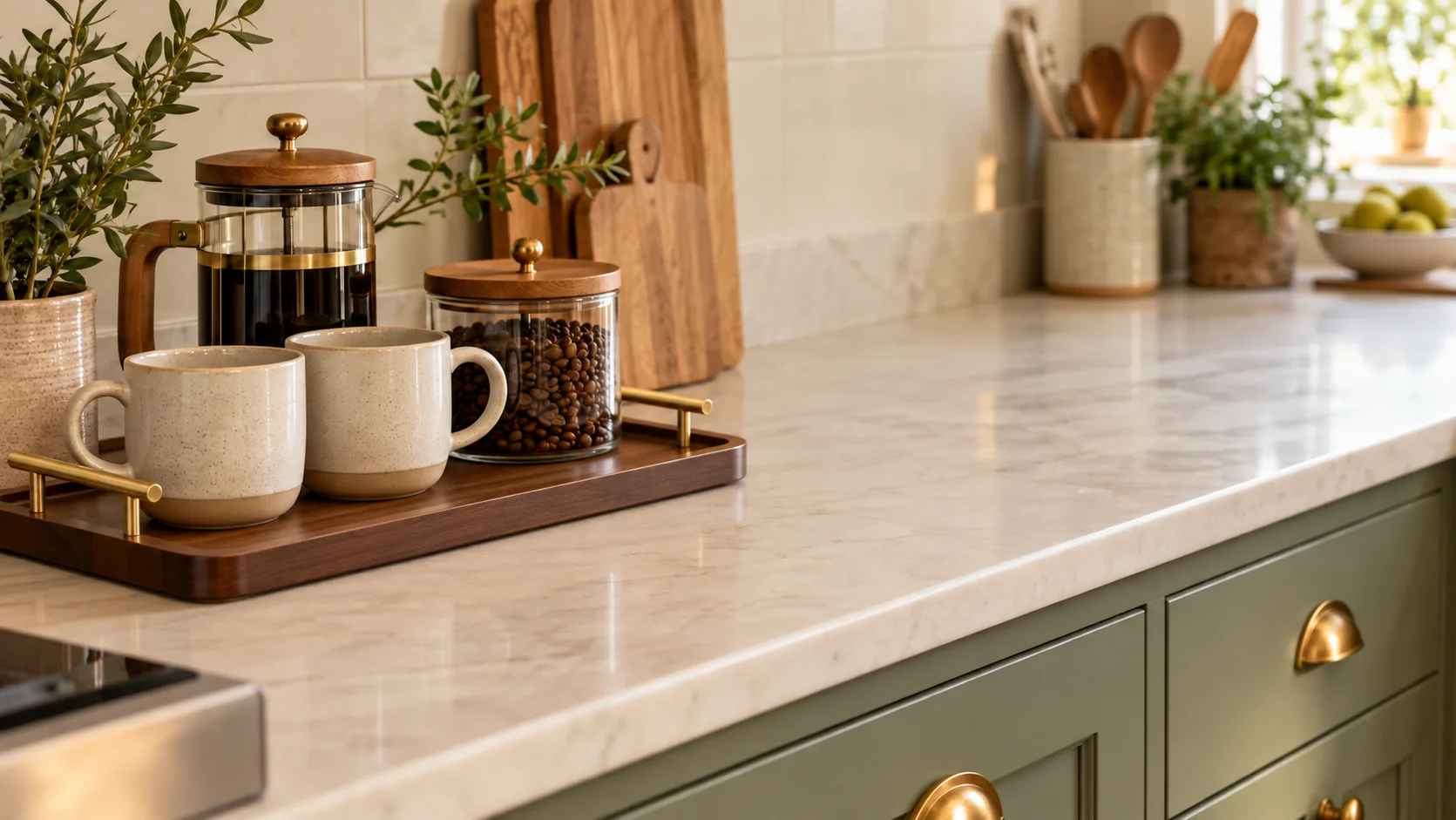
Small counters feel cluttered quickly, but putting everything away is not always practical.
If you use cooking oil, salt, coffee supplies, or a few utensils every day, a compact tray or organizer can define their footprint and make the counter look more intentional.
The best version is narrow enough to preserve prep space and easy to lift when you wipe the counter.
Before buying, group the items you plan to store and measure their combined footprint. Your organizer should not be dramatically larger than what it holds.
A tray is often enough. You do not automatically need a multi-tier rack.
4. Under-Sink Storage That Works Around Plumbing
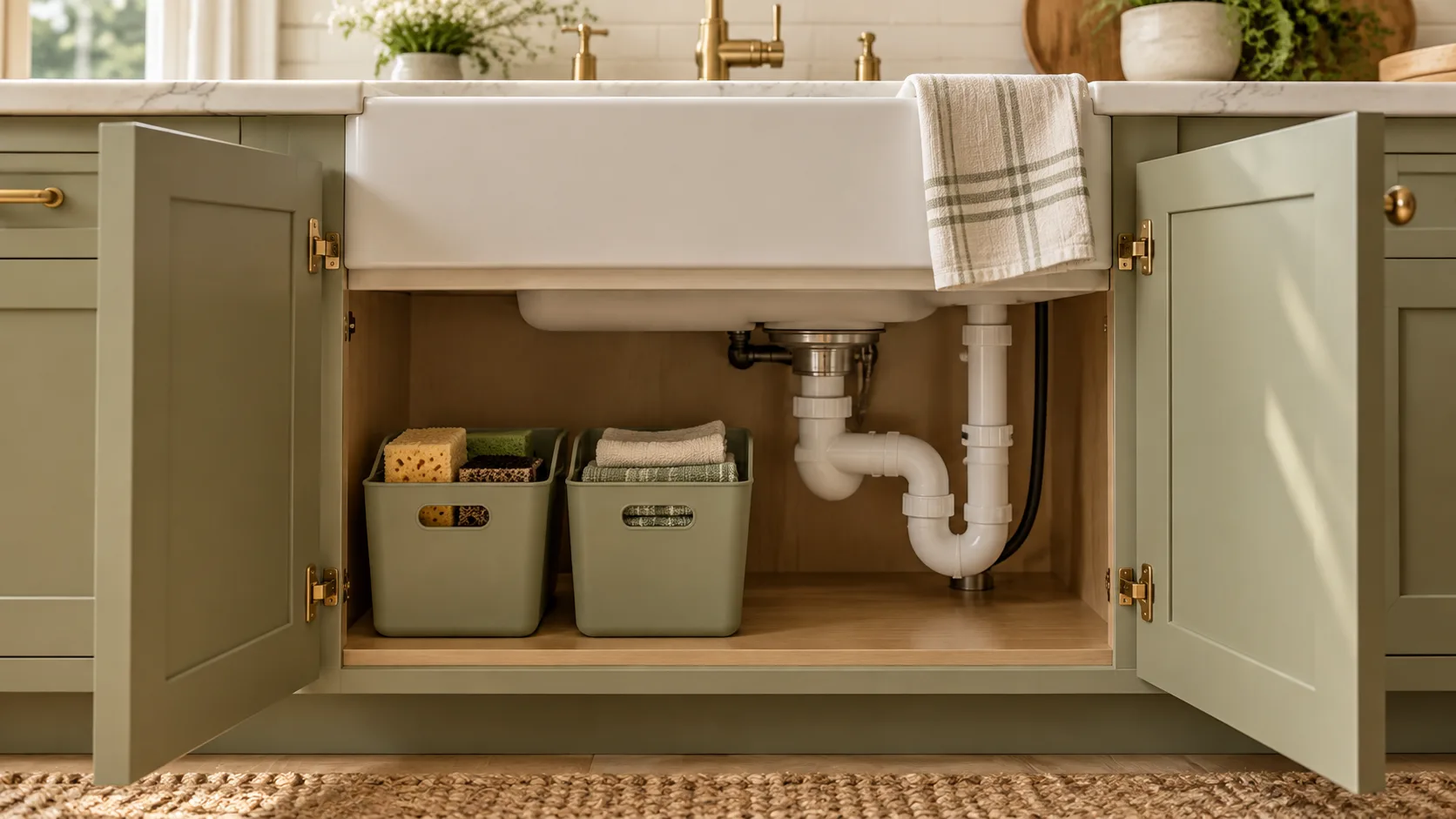
The cabinet under the sink is one of the trickiest storage areas because pipes interrupt otherwise useful space.
Instead of buying a large organizer first, measure around the plumbing. Look for narrow pull-out drawers, stackable storage bins, or adjustable units that can sit to one side of the pipes.
Keep frequently used cleaning products toward the front. Back-stock can sit farther behind.
If children or pets can access the cabinet, store household chemicals according to their safety instructions and use appropriate child-resistant storage where needed.
The biggest mistake here is buying from a styled product photo without checking pipe placement. Under-sink cabinets vary too much for one organizer to fit every space.
5. Vertical Storage for Baking Sheets and Cutting Boards
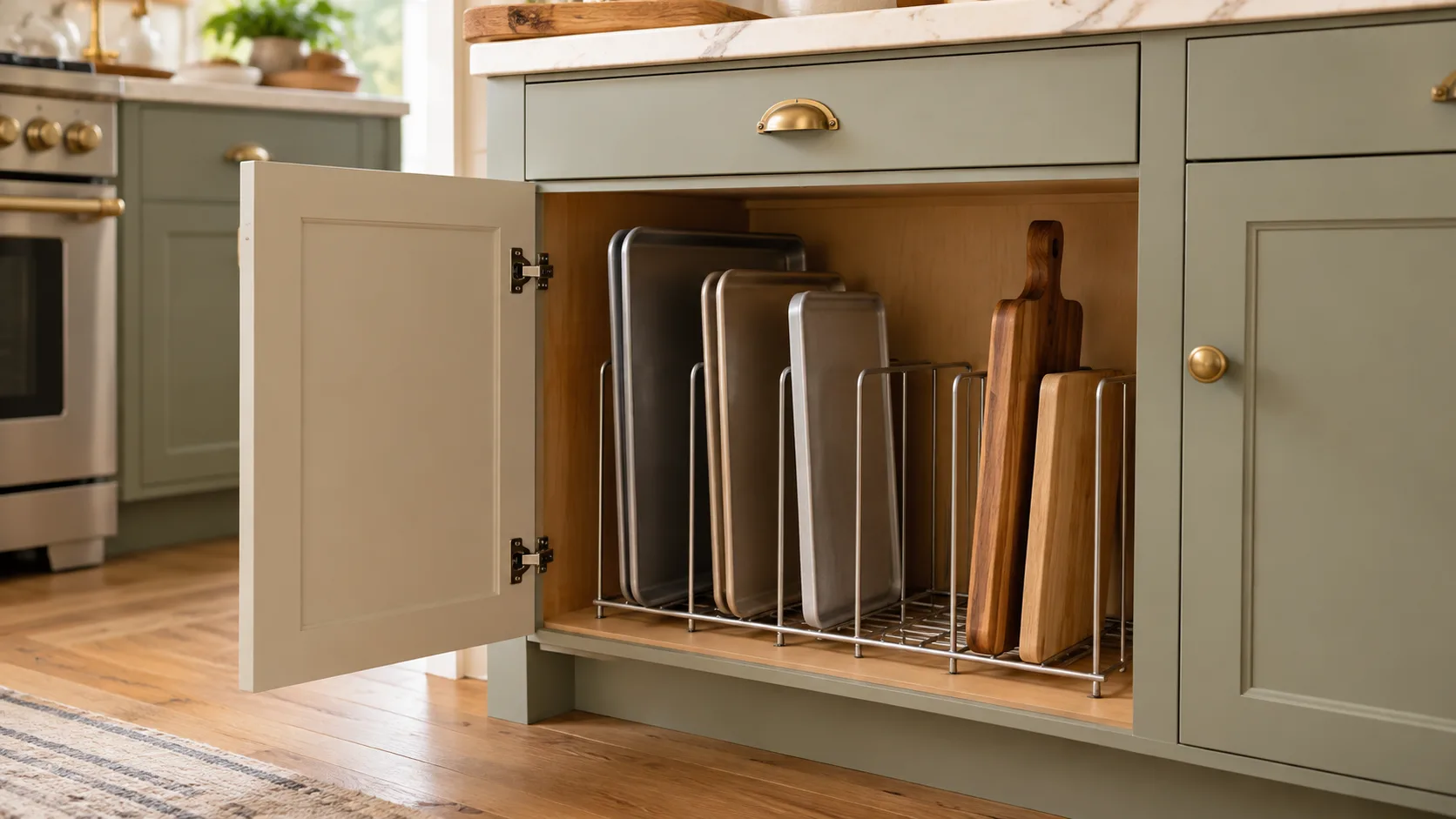
Flat items are often easier to use when stored vertically.
A simple divider or organizer rack can keep baking sheets, cutting boards, trays, and cooling racks upright so you can remove one without unstacking everything.
Measure the tallest item and the cabinet opening. Make sure the divider slots are wide enough for thicker boards or pans.
If you already have a deep lower cabinet, this can be one of the smallest purchases with the biggest everyday payoff.
6. Drawer Dividers That Match What You Actually Own
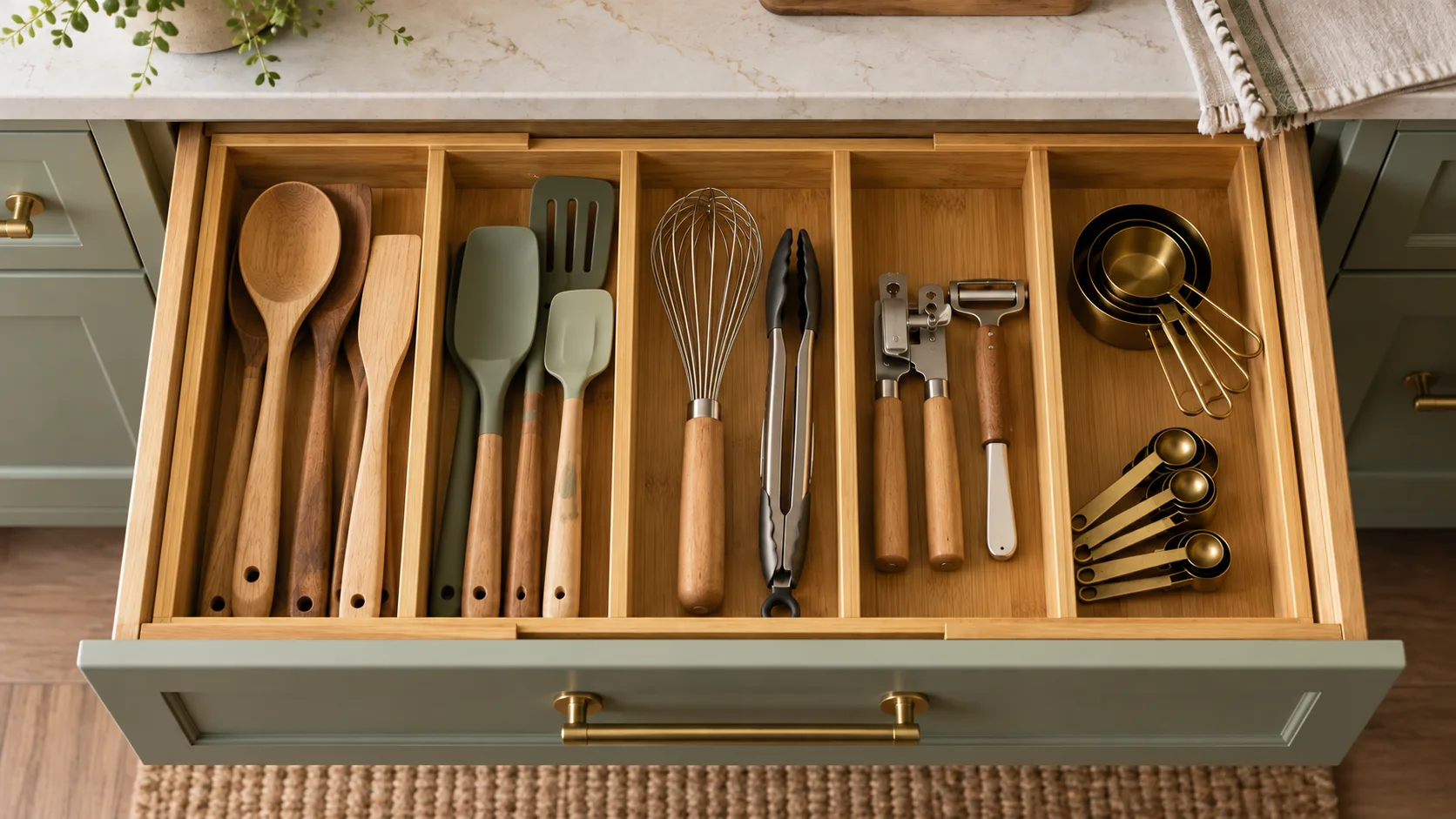
Adjustable dividers can make a crowded utensil drawer easier to scan, but the layout should follow your utensils rather than forcing them into predetermined compartments.
Empty the drawer first. Remove duplicates or tools you rarely use, group what remains, and measure the longest utensils.
Expandable dividers are useful when drawer dimensions are unusual. A fixed tray can be simpler when you have a standard drawer and a small collection.
Do not buy an elaborate organizer before decluttering. No insert can make an overfilled drawer convenient.
7. Spice Storage That Lets You See Labels
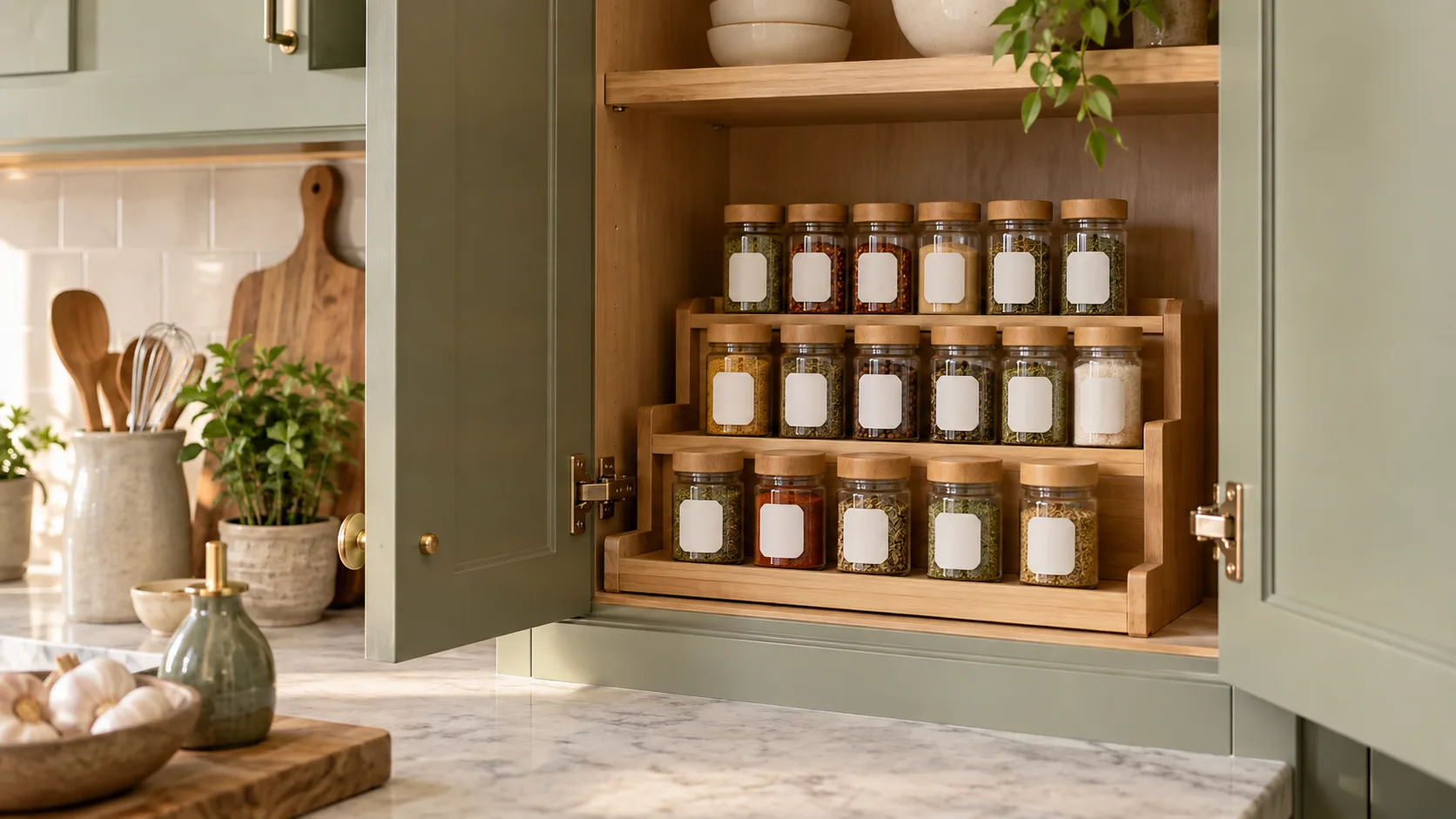
The best spice organizer is the one that lets you identify what you have without moving six jars.
In a shallow drawer, angled spice inserts can work well. In a cabinet, a tiered shelf can raise the back row. In a narrow space, a compact pull-out rack may be more useful.
Choose the system based on where your spices already live and how many you regularly use.
Be careful with transferring every spice into matching jars purely for appearance. It adds cost and maintenance. If the original containers fit your space and labels are readable, organizing them may be enough.
8. Food-Container Lid Organizers
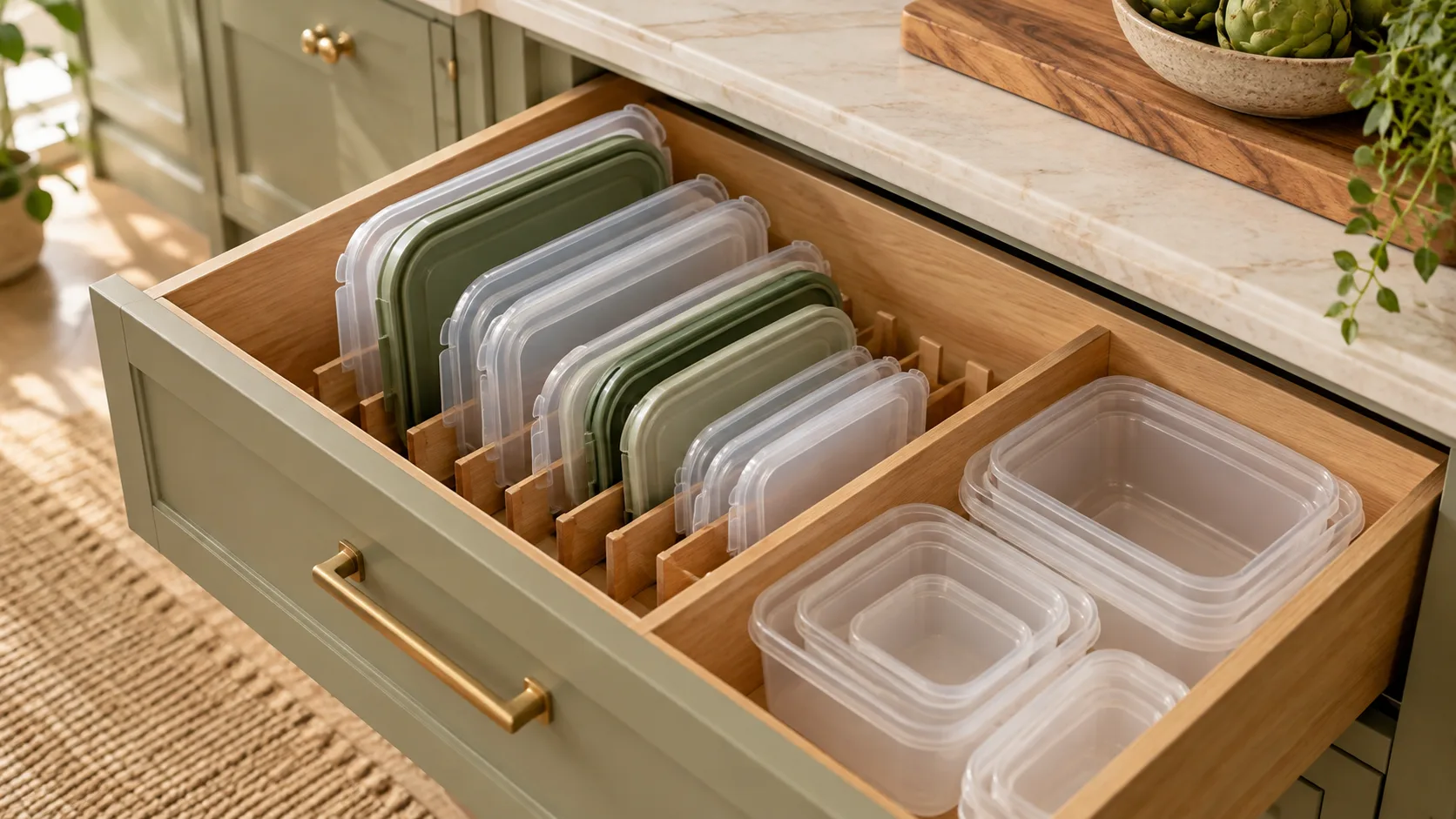
Food-storage containers can consume a surprising amount of cabinet space, especially when lids are scattered.
A vertical lid organizer can keep lids sorted by size while containers nest separately.
Before shopping, match lids to containers and discard damaged or unmatched pieces. Then measure the remaining lid collection.
This is another category where decluttering first often means you can buy a smaller, less expensive organizer.
9. Rolling Carts Only When You Have a Real Parking Spot
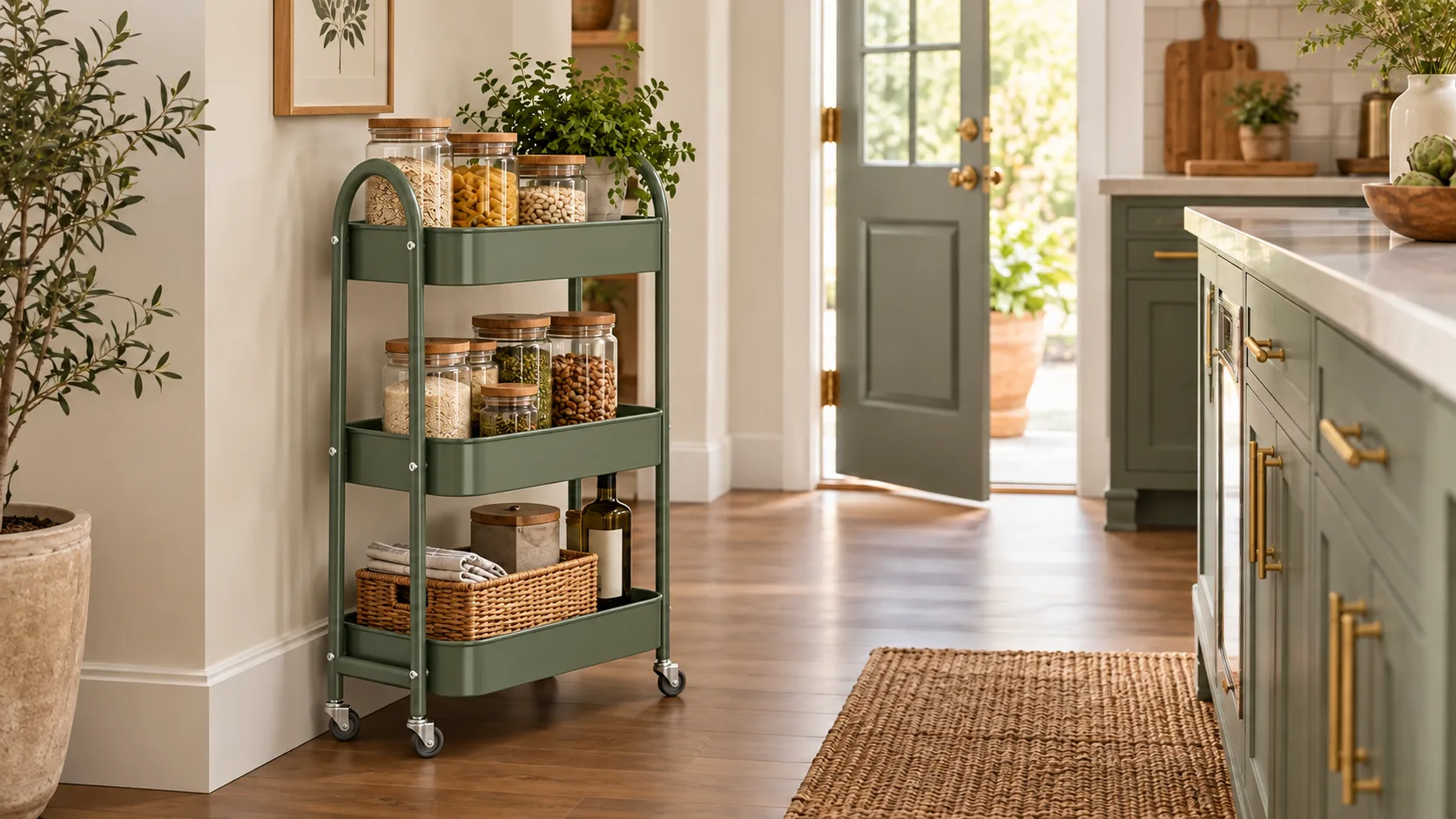
A slim rolling cart can add useful storage beside a refrigerator, at the end of a cabinet run, or along an unused wall.
But in a truly small kitchen, a cart can also become a traffic obstacle.
Measure both the parking location and the path around it. Make sure drawers, doors, and appliances can still open comfortably.
A cart earns its footprint when it stores a clear category such as pantry staples, coffee supplies, or baking tools. If it becomes a place for miscellaneous objects, it will make the room feel more crowded.
10. Under-Cabinet Lighting as an Organization Upgrade
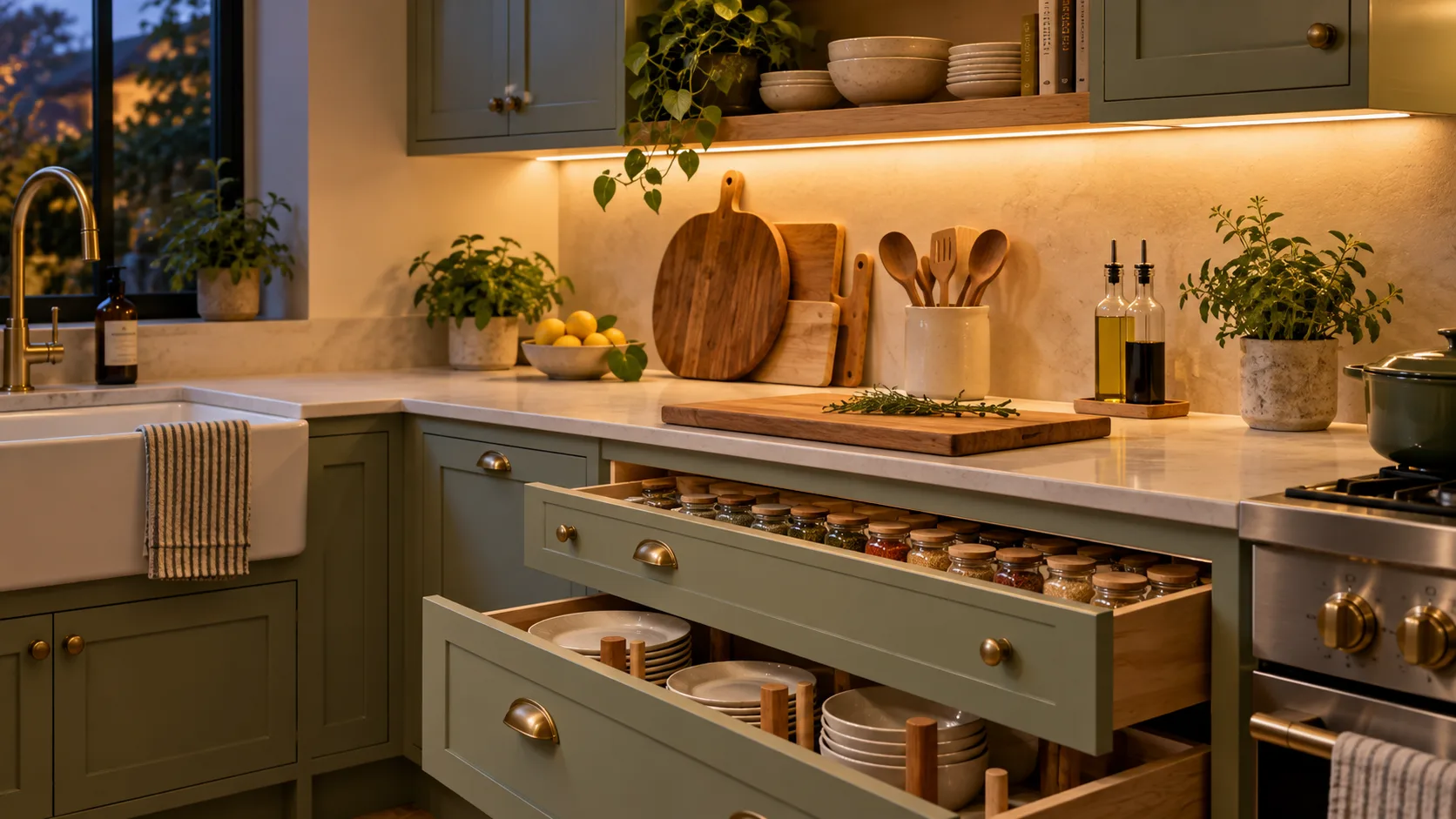
Lighting is not technically storage, but it can make a small kitchen function better.
Dark counters and cabinet corners are harder to use, which can encourage clutter to accumulate unnoticed. Under-cabinet lights make work surfaces clearer and can help a compact kitchen feel more open.
Look for a light temperature that suits your room, a practical control method, and an installation method appropriate for your home. Renters may prefer removable or rechargeable options that do not require permanent wiring.
Check dimensions carefully so the fixture remains discreet beneath the cabinet.
How to Shop October Sales Without Buying Extra Clutter
Seasonal sales are useful when they lower the cost of something you already identified as necessary.
Before buying an organizer, ask:
1. What exact problem will this solve?
2. Where will it live?
3. Have I measured that space?
4. What will it hold?
5. Will I be able to reach and clean around it easily?
6. Do I already own something that can do the same job?
7. Would I still want it at its regular price?
That last question is useful. A large discount can create urgency, but the best small-kitchen purchase is the one that improves your routine after the sale is forgotten.
What Is Worth Spending More On?
Spend a little more when construction affects daily function.
A frequently used pull-out system should slide smoothly and feel stable. A rolling cart should have reliable wheels and a frame that does not wobble. An adjustable shelf should support the intended weight.
Save on simple pieces where complexity adds little value. Basic bins, trays, dividers, and lid holders do not need to be expensive if their dimensions and materials suit the job.
Neutral, simple designs also tend to age better than highly decorative organizers. In a small kitchen, visual quiet can make the room feel less crowded.
A Simple Pre-Sale Small-Kitchen Checklist
Before October shopping, do this first:
- Photograph each problem cabinet or drawer.
- Declutter duplicates and unused tools.
- Measure width, depth, and height of the exact storage area.
- Note hinges, pipes, outlets, and door clearances.
- Decide what category each organizer will hold.
- Set a maximum budget before browsing.
- Save product dimensions, not just product photos.
- Compare the sale price with the normal price when possible.
- Prioritize one or two high-friction areas instead of reorganizing the entire kitchen at once.
A small kitchen rarely needs more storage products everywhere. It needs the right storage in the places that cause the most frustration.
Shop the Look: Small-Kitchen Storage Worth Considering
You do not need a matching organizer for every cabinet. Start with one problem and choose the simplest solution that fits. This is a category-based buying guide, not a hands-on product review. Inspiration images illustrate possible layouts rather than specific products for sale.
A shelf riser for unused cabinet height
Best for: Mugs, bowls, or small plates that are difficult to reach in a tall stack.
Check first: Interior cabinet dimensions, clearance above and below the shelf, and the manufacturer's load limit.
Skip it if: Moving the existing adjustable shelf solves the problem. A riser can reduce useful space if tall items no longer fit.
A handled bin for deep shelves
Best for: Packaged snacks or baking supplies that disappear at the back.
Check first: The narrowest cabinet opening, handle clearance, and how heavy the bin will be when full. A loose bin is not a mounted pull-out drawer; support it when lifting.
Reuse first: A clean, sturdy container you already own. Keep food and household cleaning products in separate storage.
A vertical divider for boards and baking sheets
Best for: Flat pieces you currently have to unstack.
Check first: Slot width, cabinet height, and stability with your heaviest board. Leave space to lift each item out.
Skip it if: Your cabinet is too low or the rack would block access to everyday cookware.
Adjustable drawer dividers for everyday utensils
Best for: Drawers where tools overlap and get tangled.
Check first: Internal drawer length, divider height, adjustment range, and clearance when closing. Pressure-fit dividers may shift or mark delicate surfaces.
Reuse first: Your existing utensil tray after removing duplicates. Buy dividers only if the remaining tools need a different layout.
A compact tray for a small daily-use zone
Best for: Keeping coffee supplies or a few frequently used items together.
Check first: The combined footprint of the items and the counter space left for food preparation. Choose a surface you can clean easily.
Skip it if: The tray leaves too little usable workspace. A tray contains clutter; it does not create more counter space.
Before checking out
Confirm the exact variant, current price, shipping, and return conditions on the retailer's page. None of these categories is a confirmed sale offer. Buy one organizer first, use it for a few days, and decide whether another purchase is necessary.
FAQ
What organizers are most useful in a small kitchen?
Shelf risers, vertical dividers, pull-out bins, drawer dividers, and compact countertop trays are useful when they solve a specific access or space problem. The best choice depends on your kitchen measurements and routine.
Should I buy matching organizers for every cabinet?
Not necessarily. Matching containers can look tidy, but function matters more. Different cabinets often need different solutions.
How do I organize a small kitchen on a budget?
Declutter first, group items by use, move rarely used pieces out of prime storage, and buy organizers only for problems that remain. Simple trays and bins can work as well as elaborate systems.
Are rolling carts good for small kitchens?
They can be, but only when there is a clear place to park the cart without narrowing walkways or blocking doors and appliances.
What should I measure before buying kitchen organizers?
Measure the interior width, depth, and height of the exact cabinet, shelf, drawer, or counter area. Note obstructions such as hinges, plumbing, handles, and door swing.
Final Thought
The smartest small-kitchen organization purchase is not the organizer with the biggest discount. It is the one that makes an annoying daily task noticeably easier without taking over the room.
Use October sales as an opportunity to buy deliberately. Measure first, solve the highest-friction problem, and leave the rest of the kitchen alone until you know it needs something.
Save this guide before you shop so you can check your measurements and priorities instead of relying on a sale-page photo.